Honesty
There is something quietly compelling about a font that does not pretend to be perfect. In a digital landscape saturated with sleek, uniform typefaces, the search for visual authenticity often leads designers and content creators back to imperfection—to the textures, irregularities, and human touch that mass-produced fonts tend to sand away. Honesty answers this call with a rough, natural-looking brush aesthetic that feels both raw and deliberate. It is not a font that whispers from the background; it makes its presence known without shouting. For anyone building a brand, crafting a visual identity, or simply trying to communicate with a genuine voice, understanding what Honesty offers—and what it does not—can make the difference between a design that feels alive and one that simply exists.
What Honesty Actually Is
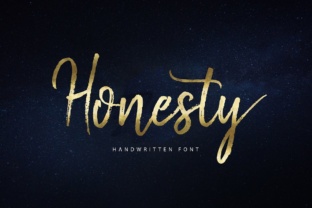
Honesty is a brush font created by Unicode, designed to evoke the texture and motion of hand-painted lettering. Unlike many digital fonts that chase geometric precision, Honesty leans into the irregularities of real brushwork. Strokes vary in thickness. Edges feel slightly worn. Letters carry the kind of organic variance you would expect from ink meeting paper at speed. This is not a font built for corporate memos or dense body text. It is a display typeface, intended for situations where typography needs to carry emotion, personality, and a sense of crafted effort.
What makes Honesty particularly interesting is how it balances roughness with readability. Many brush fonts sacrifice legibility for texture, but Honesty manages to keep its characters distinct even when used at larger sizes. The roughness is present, but it is controlled—like a skilled sign painter working quickly rather than a beginner losing control of the bristles.
Who Benefits from Using Honesty
The audience for Honesty is broader than one might assume. While it naturally appeals to graphic designers and visual artists, its utility extends into several practical domains:
- Small business owners who want their storefront signage, menus, or social media graphics to feel approachable and handmade rather than corporate and sterile.
- Content creators and influencers building a personal brand that relies on authenticity, storytelling, or a DIY aesthetic.
- Event planners and hospitality professionals designing invitations, place cards, promotional materials, or ambiance-driven collateral for weddings, pop-ups, or boutique experiences.
- Publishing and editorial designers working on covers, headers, or pull quotes for magazines, zines, or blogs that want a tactile, expressive feel.
- Product packaging designers seeking to differentiate craft goods, artisanal foods, or handmade products on crowded retail shelves.
In each of these contexts, Honesty does not just decorate—it communicates a tone. When someone encounters a design using Honesty, they are more likely to perceive effort, personality, and a human hand behind the work. That perception is valuable, especially in markets where consumers increasingly value transparency and connection over polish.
Core Characteristics That Define Honesty
Understanding what makes Honesty distinct requires looking at its key features through a practical lens. These are not abstract design talking points; they are qualities that directly affect how your audience experiences your work.
- Brush texture with natural variation. The strokes do not repeat identically. Even within a single word, letterforms carry subtle differences in weight and angle, mimicking real brush pressure and speed.
- Rough, distressed edges. The letter boundaries feel worn, as if painted onto a textured surface. This creates depth and a sense of materiality that flat vector fonts cannot replicate.
- Consistent character spacing. Despite its rough appearance, Honesty maintains thoughtful kerning. Letters do not crash into each other, and spacing remains predictable enough for comfortable reading in short phrases.
- Support for multilingual Unicode characters. Because it is built from Unicode, Honesty accommodates a wide range of languages and special characters, making it suitable for global or multicultural projects.
- Single-weight design. Honesty typically comes in one weight, which means it excels in specific roles rather than trying to be an entire type system. This is a strength when used intentionally, but it also sets expectations about where the font fits.
These characteristics combine to create a font that feels energetic, grounded, and approachable. It is particularly effective when paired with cleaner, more neutral typefaces for body copy, creating contrast that draws attention to headlines without overwhelming the overall layout.
Where Honesty Shines: Real-World Applications
To understand the font's value, it helps to picture it in action. Consider a coffee shop that wants to build a brand around craftsmanship and local roots. The shop's chalkboard menu, takeaway cup logo, and Instagram posts all need to feel consistent. Honesty used for the shop's name and drink categories communicates the same handmade ethos that the coffee itself represents. Customers may not consciously identify the font, but they will feel the alignment between visual design and product experience.
Another example: a wedding invitation suite for an outdoor, rustic celebration. Honesty applied to the couple's names and key event details immediately sets a tone that is romantic without being overly formal. The rough edges echo the natural setting, while the legibility ensures practical information—date, time, location—remains easy to read at a glance.
For digital creators, Honesty works well in video thumbnails, YouTube channel art, or podcast cover images. In an environment where viewers scroll quickly, the font's texture and personality grab attention more effectively than a generic sans-serif. It signals that the content behind the thumbnail is likely to be genuine, entertaining, or emotionally resonant.
Packaging designers also find value here. A small-batch hot sauce brand, for instance, might use Honesty for the product name on its label. The font's rough quality reinforces the idea of small-batch production and natural ingredients, while its readability ensures the brand name sticks in the shopper's memory.
Strengths and Considerations
Like any tool, Honesty has strengths that make it effective in the right hands, along with limitations that matter depending on your project.
Strengths:
- Strong emotional resonance. The font naturally conveys warmth, authenticity, and human effort.
- High visual impact at display sizes. It commands attention without needing additional ornamentation.
- Versatile across media. Honesty works in print, on screen, and in physical signage with consistent results.
- Broad language support thanks to its Unicode foundation, which avoids common character-set frustrations.
Considerations and limitations:
- Not suitable for extended body text. The roughness and stroke variation become fatiguing in long paragraphs.
- Single weight limits hierarchy options. You cannot use bold or light variants within the same font family for contrast.
- Performance in very small sizes may compromise legibility, especially on low-resolution screens.
- Overuse or pairing with other rough fonts can create visual clutter. Honesty works best when balanced with clean, neutral counterparts.
Understanding these boundaries helps you deploy Honesty where it adds value rather than forcing it into roles it was not designed to fill. A thoughtful designer knows that restraint often amplifies impact.
How to Evaluate Whether Honesty Fits Your Project
Choosing a font is ultimately a question of alignment. Before committing to Honesty, consider the following practical questions:
- What emotion do you want your audience to feel? If the answer leans toward trustworthy, handmade, warm, or spirited, Honesty is likely a strong candidate. If you need to convey precision, luxury, or cold authority, look elsewhere.
- Where will the font appear? Honesty works best at medium to large sizes in short bursts—headlines, logos, quotes, labels. If your project relies heavily on body copy, Honesty should be reserved for accents only.
- What is the context of your audience? A creative agency audience may embrace the rough texture as intentional design. A conservative corporate audience, however, may perceive it as unprofessional. Know your viewers.
- Can you pair it effectively? Honesty pairs well with clean sans-serif fonts like Open Sans, Lato, or Montserrat for body text. Testing combinations early in your design process saves time and prevents mismatched aesthetics.
Evaluating a font is not about whether it looks good in isolation—it is about whether it serves your message and your audience. Honesty serves projects that value personality, texture, and a sense of real human involvement. When those priorities align with your goals, the font becomes more than decoration; it becomes part of your communication strategy.
Practical Expectations When Using Honesty
Working with Honesty in real projects involves a few practical realities. First, always preview the font at your intended output size early in the design process. A brush font that looks stunning on a poster may lose clarity on a business card or mobile banner. Second, pay attention to letter spacing when using all-caps settings. Some brush fonts tighten up in ways that reduce legibility, so manual adjustment may be necessary.
Also consider that Honesty, like many display fonts, may not render identically across all devices or browsers. Testing on multiple platforms—especially if your design is digital—ensures the texture and weight translate as intended. For print projects, request a proof before final production to confirm that the rough edges do not become muddy or lose definition on certain paper stocks.
Finally, remember that Honesty is a single tool in a larger visual system. It works best when surrounded by thoughtful design choices—generous whitespace, complementary colors, and restrained use of additional textures. A font this expressive does not need competition from other busy elements. Let it breathe, and it will reward you with presence.
Conclusion: The Value of Choosing Honesty
Honesty is more than a font with rough edges. It is a design choice that signals something about the creator and the message. In a world where digital perfection is easy to achieve, choosing a font that looks deliberately handmade communicates intentionality. It says that someone cared enough to let imperfection stand as part of the story.
Whether you are designing a brand identity, building a content channel, or crafting materials for an event, Honesty offers a way to connect with audiences on a more human level. It is not for every project, and it does not pretend to be. But for the projects where it fits, Honesty delivers a texture of feeling that polished fonts simply cannot replicate.
Understanding its strengths, respecting its limitations, and using it with purpose is what separates effective design from decoration. When you choose Honesty, choose it because the message deserves to feel real.