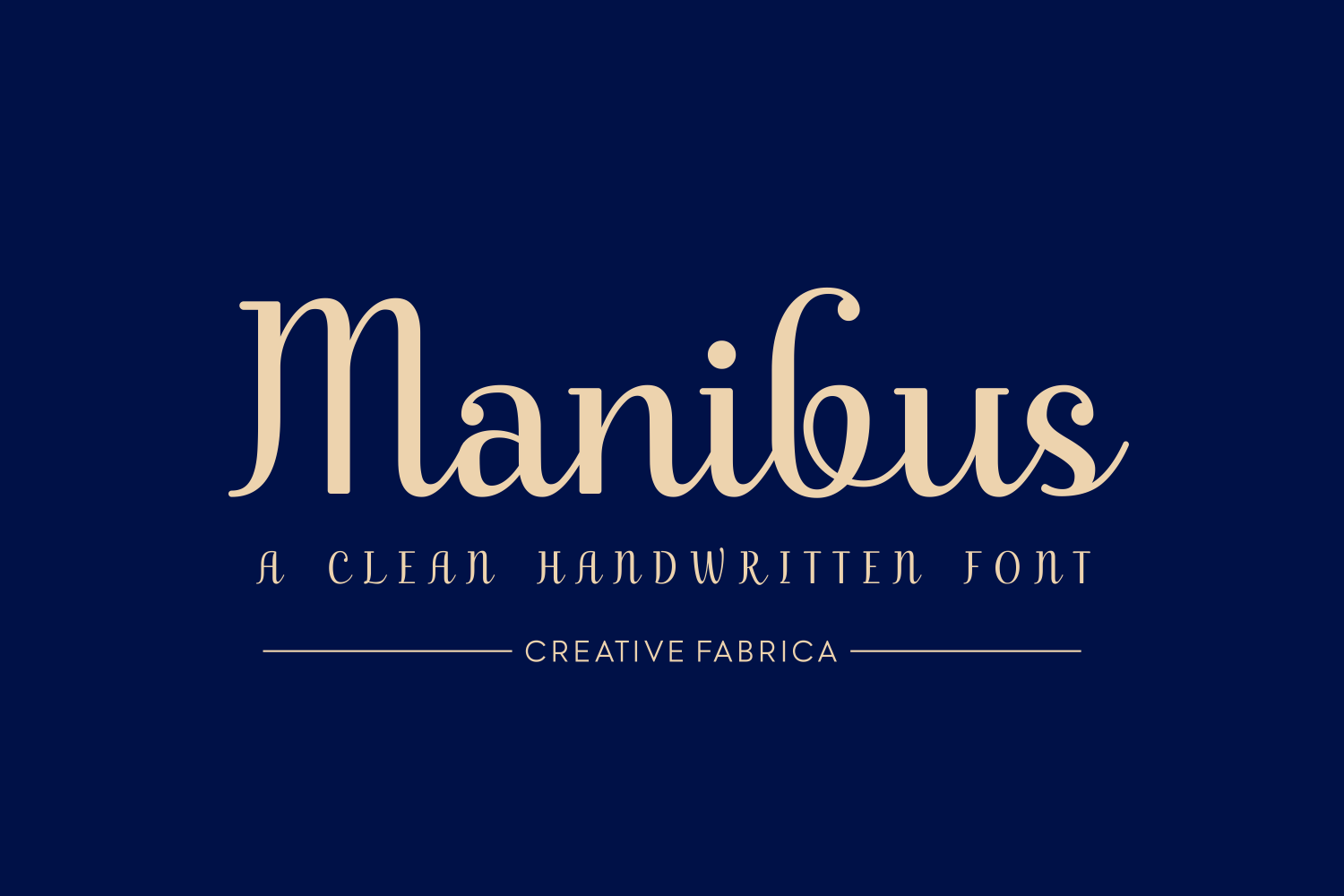
Manibus: Elegant Handwritten Font for Professionals
Few handwritten fonts manage to strike the balance between personal warmth and professional polish. Most lean too casual for business use or too rigid to feel authentic. Manibus occupies a rare middle ground. It reads like clean handwriting—connected, upright, and naturally flowing—without the decorative flourishes that can distract in formal settings. That combination makes it a practical choice for anyone who wants typography that feels both human and dependable.
Handwritten fonts often get relegated to invitations or whimsical branding. Manibus challenges that assumption. Its structure is deliberate enough for body text, yet its organic connections keep it from feeling mechanical. If you have ever struggled to find a font that communicates warmth without sacrificing clarity, this one deserves a closer look.
What Makes Manibus Distinct?
Manibus is a connected script, meaning letters link together in a continuous stroke. This creates a natural rhythm that mimics genuine handwriting. The upright posture sets it apart from many scripts that lean heavily rightward. That upright stance gives it a stable, grounded appearance—more like a carefully written letter than a hurried note.
Clean, Legible Letterforms
The characters are formed with restraint. Descenders and ascenders stay within reasonable proportions, and loops remain open rather than tight or cramped. This reduces ambiguity between letters like a and o or n and u. For anyone using Manibus in body paragraphs or captions, that clarity matters. Readers do not have to guess at characters or re-read passages because of unclear glyph shapes.
Consistent Stroke Weight
Unlike some handwritten fonts that vary dramatically between thick and thin strokes, Manibus keeps its line weight relatively even. This consistency helps it hold up at smaller sizes. It also reproduces well across different mediums, from high-resolution screens to ink on paper. The flow remains smooth without abrupt transitions that can make a font look uneven when scaled.
Practical Applications Across Contexts
The true test of any font is how it performs in real use. Manibus adapts to a surprising range of environments because it does not shout for attention. It supports the message rather than competing with it.
Professional Correspondence and Branding
For professionals who send client proposals, thank-you notes, or personalized follow-ups, Manibus lends a thoughtful tone without appearing overly casual. When used in a logo or letterhead, it communicates approachability while retaining credibility. A legal consultant, financial planner, or marketing agency might use it for pull quotes or signature lines where they want to humanize their brand identity without undermining authority.
Entrepreneurs and business owners can also use Manibus in presentation decks. A slide title set in Manibus paired with a clean sans-serif for body text creates a polished contrast. The handwritten element draws the eye without distracting from data or key points.
Digital Content and Social Media
Bloggers, newsletter writers, and social media content creators often need typography that feels personal. Manibus works well for quote graphics, Instagram story text overlays, or email headers. It reads clearly on mobile screens, which is critical when many viewers first encounter content on their phones. If you run a lifestyle blog, coaching page, or educational account, alternating Manibus with a neutral sans-serif can help sections feel distinct while keeping the overall aesthetic cohesive.
Educational and Instructional Materials
Educators and course creators benefit from fonts that feel encouraging. Manibus is suitable for worksheet headers, lesson slide titles, or digital badge designs. Its upright structure avoids the fatigue that sometimes accompanies reading heavily slanted scripts. Students or participants may find materials more inviting when they carry a handwritten quality, as long as legibility remains high.
Publishing and Print Collateral
Self-publishers, indie authors, and hobbyists producing printed materials such as book covers, flyers, or product packaging can use Manibus to create a distinctive look. For product labels on artisan goods like handmade soap, coffee bags, or stationery, the font conveys craftsmanship and care. In book design, it works well for chapter openers or decorative headings, provided it is used sparingly so the effect remains intentional rather than overwhelming.
Reduced Cognitive Load
Because Manibus is connected and upright, readers process it quickly. The brain does not have to work as hard to separate letters that might otherwise feel disjointed. This is especially beneficial for longer form content where reading stamina matters. A font that slows comprehension, even slightly, creates friction over multiple paragraphs. Manibus avoids that trap by staying visually straightforward.
Versatility Across Platforms
Handwritten fonts often struggle in digital environments. Thin strokes disappear on bright screens, and ornate details become noise at small sizes. Manibus handles both extremes reasonably well. Its even stroke weight and open counters mean it remains readable in email signatures, web headings, and mobile interfaces alike. For freelancers and marketers who repurpose content across multiple channels, this reduces the need to switch fonts depending on the medium.
Tone and Emotional Connection
Typography carries subtext. A font that looks like handwriting signals that a real person is behind the message. In an era of automated emails and templated communication, that signal matters. Manibus helps brands and individuals create a sense of directness. A handwritten font can make a standard announcement feel more personal, or turn a routine instruction into something that seems thoughtful.
Practical Considerations When Using Manibus
Even a well-designed font requires thoughtful implementation. Here are a few guidelines based on real use.
Pairing with Other Fonts
Manibus works best as an accent. Pair it with a neutral sans-serif such as Open Sans, Lato, or Inter for body text. The contrast between a clean, geometric sans and the organic flow of Manibus creates visual hierarchy without clashing. Avoid pairing it with another script or a highly decorative serif, as that can create competition between typefaces and muddy the overall layout.
Size and Spacing
For headings, use Manibus at sizes above 24 pixels or points. Below that threshold, the connected strokes may compress and reduce legibility depending on the rendering environment. If you need a smaller handwritten look for captions or notes, increase letter spacing slightly so each glyph has room to breathe. Most design tools allow tracking adjustment, and a small increase of two to five units often helps.
Color and Background Contrast
Manibus reads best on solid, light backgrounds. Dark mode or heavily textured backgrounds can obscure the subtle stroke variations that give it character. In print, avoid pale gray or overly glossy paper if the font is rendered at small sizes. High contrast between font color and background preserves the natural flow.
Licensing and File Formats
Before committing to Manibus for a commercial project, confirm the license terms. If you are using it in client work, branded merchandise, or digital products like templates and PDFs, ensure the license covers commercial use. Check whether it includes web font embedding if you plan to use it on a live site. Knowing these details upfront prevents problems after production has started.
Final Observations on Manibus
Manibus is not the kind of font that demands attention with ornamentation. Its strength lies in restraint. It looks like handwriting from someone who writes clearly and deliberately. For professionals, creators, and business owners who want to convey warmth without losing authority, that is a valuable quality.
Typographic choices shape how audiences perceive content before they read a single word. A font like Manibus can set a tone that invites trust, signals care, and respects the reader enough to remain legible. Whether you are designing a brand identity, laying out a publication, or composing a newsletter, having a reliable handwritten option in your toolkit expands what you can communicate silently through type.