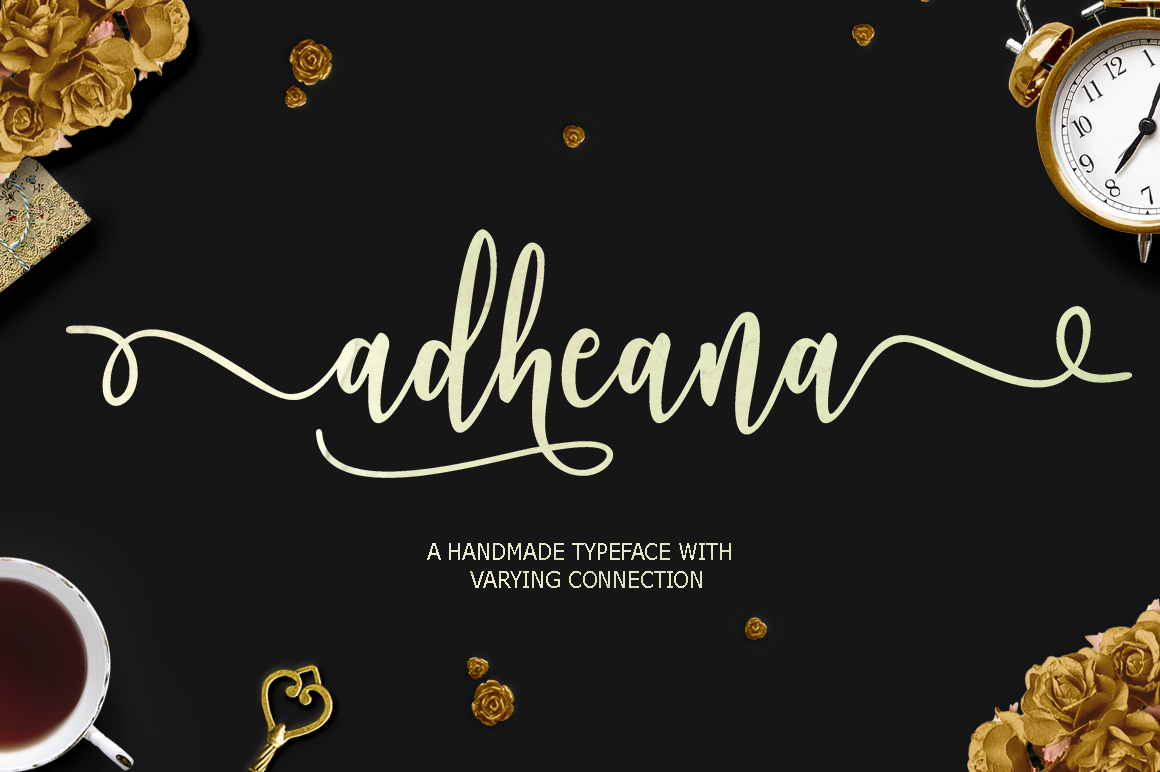
Adheana and Adheana Script: A Hand-Brushed Typeface with Distinct Character
When you are choosing a typeface for a branding project, a poster, or a digital headline, the sheer number of options can be overwhelming. You might be drawn to the warmth of hand-lettered styles but want something that still feels intentional and polished. Adheana and Adheana Script offer a compelling middle ground. Created with real brush and ink, this typeface family delivers a bold, irregular baseline that immediately catches the eye. But like any design tool, it has specific strengths and limitations. Understanding where it fits and where it might not work can help you decide if it is the right choice for your next project.
What Makes Adheana Distinct?
Adheana was not drawn digitally from scratch; it was physically painted with a brush and ink, then digitized. That process is immediately visible in every glyph. The strokes have natural variation in thickness, slight splatters, and an overall irregular baseline that no automated algorithm can fully replicate. The result is a typeface that feels alive — as if an artist just set down the brush.
Adheana Script, the companion style, extends that same hand-brushed quality into a more connected, flowing form. Together, they form a system where you can mix uppercase display letters with script accents, giving you flexibility within one cohesive visual language. For projects where authenticity and a tactile aesthetic matter, this combination stands out from cleaner, vector-based script fonts.
One of the most noticeable characteristics is the bold weight. The letters have a confident, substantial presence. They do not recede into the background; they demand attention. This makes Adheana particularly effective for short headlines, logos, product names, and any context where you need a strong visual anchor.
Comparing Adheana with Other Hand-Brushed Styles
The market for hand-drawn and hand-brushed typefaces has grown steadily. You can find dozens of options that claim to look authentic, but many fall short when you examine them closely. Some are too uniform, betraying their digital origins. Others are so rough that they become illegible at small sizes.
Adheana sits in a practical sweet spot. It retains the organic, imperfect feel of real brushwork while still being structured enough to read clearly. Compared to highly decorative calligraphy fonts, Adheana is more direct and less ornate. Compared to grunge or distressed typefaces, it feels more intentional and less chaotic. The irregular baseline is not random; it follows a consistent rhythm that keeps the eye moving across the text without stumbling.
If you are evaluating alternatives, consider how much irregularity you need. A font with too much variation can look messy in a professional context, while a font that is too perfect can feel sterile. Adheana balances these extremes. It gives you character without sacrificing readability, which is a tradeoff worth noting.
Strengths and Weaknesses of the Bold, Irregular Baseline
The irregular baseline is the defining feature of Adheana, but it is also the aspect that requires the most care. When you set a headline in this font, the letters do not sit on a straight line. They dip and rise slightly, mimicking the natural motion of a brush in hand. This works beautifully for titles, pull quotes, and single-word logos. It creates a sense of movement and spontaneity.
However, for longer passages of body text or multi-line paragraphs, the irregular baseline can become distracting. Readers expect text to be aligned horizontally, and too much wobbling can slow down comprehension or even cause eye strain. This is not a flaw in Adheana itself — it is simply a design choice that makes it more suitable for display purposes than for extended reading.
If your project requires a combination of headlines and body text, consider using Adheana for the prominent headings and pairing it with a clean, neutral sans-serif or serif for the paragraphs. This contrast can enhance the hand-brushed feel of the headlines while maintaining readability for the longer content.
When Adheana Is the Right Choice
Adheana and Adheana Script are ideal for projects where you want to convey authenticity, craftsmanship, or a personal touch. Think of a boutique coffee shop’s logo, a craft brewery label, a handmade soap brand, or a wedding invitation suite. These are contexts where a generic font would feel out of place, and where a brush-and-ink typeface reinforces the message that something was made with care.
Digital uses also benefit. Because the font is available in OpenType format with standard ligatures and alternate characters, you can use it in web design, social media graphics, and digital advertisements. The bold weight ensures it remains legible even on small screens, provided you keep it at a reasonable size (typically 24px or larger for web use).
Another strong use case is in editorial design — specifically for section headers, drop caps, or highlighted quotes in magazines and blogs. The irregular baseline adds a human element that contrasts nicely with the structured grid of a printed page or a website layout.
Realistic Examples
Imagine you are designing a logo for a small pottery studio. You want the name to feel earthy and handmade. Using Adheana in all caps with a slight letter spacing gives you a weighty, grounded appearance. For the tagline, Adheana Script in a smaller size adds a flowing, graceful contrast. The two styles work together without competing.
Alternatively, consider a poster for a music festival. The lineup is a mix of indie bands. A clean sans-serif would be too corporate. Adheana, with its brush strokes, captures the raw energy of live performance. You can layer the headline in Adheana over a textured background, and the irregular baseline will not fight the background — it will blend naturally.
Limitations and When to Look Elsewhere
No typeface is universal, and Adheana is no exception. If your project demands a very formal or corporate tone, such as legal documents, financial reports, or medical communications, this hand-brushed style will likely feel out of place. It projects informality and artistic freedom, not institutionality or precision.
Another limitation is legibility at very small sizes. Because the strokes have variable thickness and the baseline is irregular, reducing the font below 14–16 points can make letters like lowercase “e” and “a” difficult to distinguish. For web body text or mobile interfaces, you would be better served by a more standardized humanist sans-serif.
Also, consider the language support. Adheana and Adheana Script typically cover a standard Latin character set. If your project requires extended glyphs (Central European, Vietnamese, or Cyrillic), you may need to check the font’s character mapping first. Not all hand-brushed fonts offer comprehensive language coverage.
Tradeoffs to Weigh
One tradeoff is the visual density. The bold weight means that Adheana occupies more space than a lighter script. In a crowded layout, using it for multiple elements can make the design feel heavy. Use it sparingly for maximum impact.
Another tradeoff is the lack of multiple weights. Some typeface families offer thin, regular, bold, and extra bold versions, allowing you to create hierarchy. Adheana typically comes in one weight (bold) for the regular style, plus the script companion. If you need a range of weights within the same aesthetic, you might need to pair it with another font or choose a different family altogether.
Making an Informed Decision
When evaluating Adheana for your project, start by defining the tone you want to communicate. Is it personal, artistic, rustic, or energetic? If yes, this typeface is a strong candidate. If you need a neutral, professional, or highly legible option, look elsewhere.
Test the font in context. Type out your headline, adjust the size, and see how it interacts with other design elements. Notice how the irregular baseline affects alignment with graphics or photos. Sometimes, the slight imperfection is exactly what makes the composition work. Other times, it introduces challenges that require additional layout adjustments.
Also, consider the cost and licensing. Many hand-brushed fonts are available on a per-project or extended license basis. Check whether the license covers your intended use — web embedding, commercial printing, or app embedding. Adheana is typically sold through foundries, and the pricing reflects the quality of the craftsmanship. If budget is a concern, there are free alternatives, but they rarely match the authenticity and attention to detail that a professional hand-brushed font provides.
Final Considerations for Designers and Brand Owners
Whether you are a graphic designer building a brand identity or a small business owner creating your own marketing materials, Adheana and Adheana Script give you access to a genuinely hand-crafted look without needing to hire a lettering artist. That convenience comes with responsibility: you must use it in contexts where its unique features shine, and avoid forcing it into roles where uniformity and formal structure are required.
Pairing is another factor. A clean, simple sans-serif like Open Sans or Montserrat works well as a body text companion. The contrast between the brush strokes and the geometric clarity of the sans-serif creates visual interest without competing. Alternatively, a light, delicate serif can also balance the boldness of Adheana, especially in romantic or vintage-inspired designs.
In summary, Adheana and Adheana Script are not fonts for every project, but when the project calls for bold, authentic, hand-brushed character, they deliver. By understanding the tradeoffs — limited weight options, irregular baseline, and best-fit use cases — you can decide confidently whether this typeface belongs in your toolkit. Evaluate your audience, your medium, and your message. If authenticity and visual impact are high priorities, Adheana is worth a close look.