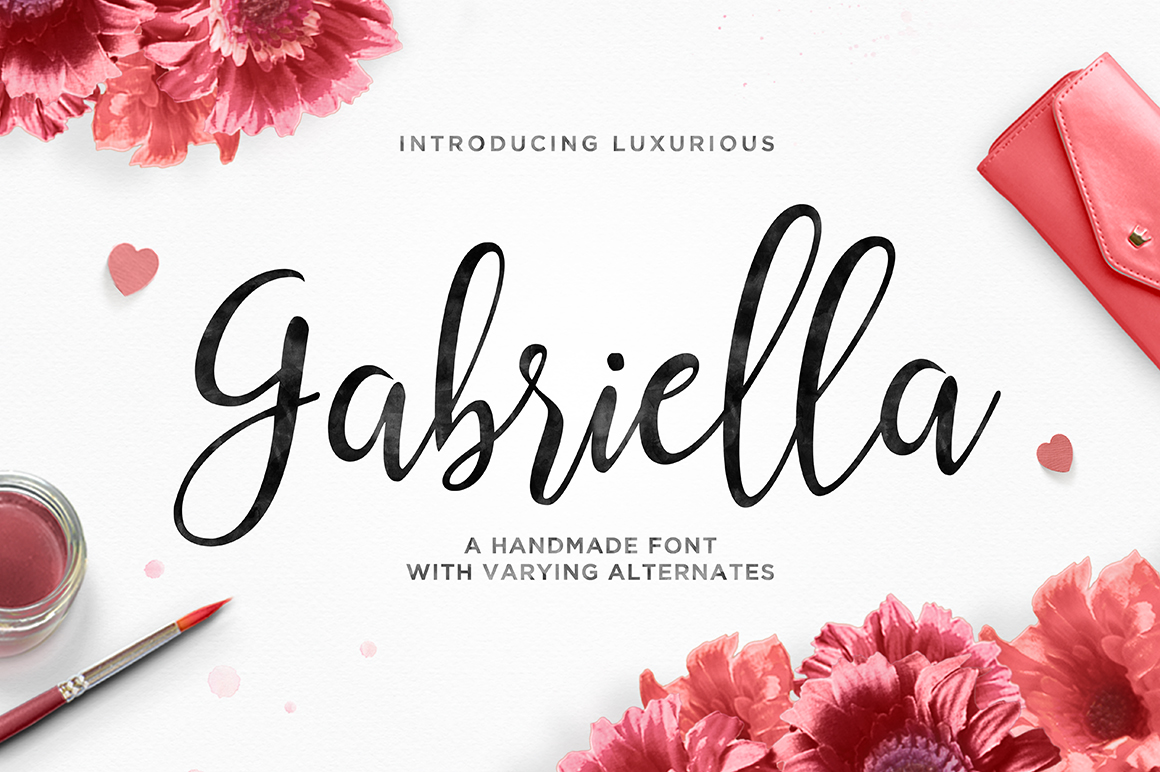
Gabriella Script Brings Hand-Painted Charm to Everyday Design
If you have ever tried to make a simple sign, a social media graphic, or a product label feel more personal, you already understand the difference a good font can make. A generic typeface may get the job done, but it rarely communicates warmth or intention. That is where Gabriella comes into the picture. This hand-brushed modern calligraphy script font was created with an actual pen brush, painted carefully on paper, scanned, and then digitally optimized. What you end up with is a typeface that looks like someone sat down and wrote it by hand — because someone did.
That human quality matters more than most people realise. In a world where so much design is purely digital, a font that carries the texture and rhythm of real ink can make your work stand out. Whether you are designing for yourself, a client, or an audience of thousands, Gabriella offers a way to add authenticity without sacrificing readability.
What Gabriella Actually Is
At its core, Gabriella is a script font built from real brush strokes. The letters were not drawn with a stylus on a tablet and then cleaned up. They were painted on paper, scanned at high resolution, and refined to preserve the natural variation in stroke width, the occasional ink bleed, and the subtle imperfections that make handwriting feel alive.
This process gives the font a texture you can see. It does not look smooth or artificial. The letterforms have a gentle bounce, a slight irregularity, and a flow that mimics how your hand actually moves when you write quickly with a brush pen. That makes it feel less like a font and more like something you would receive in a handwritten note.
For anyone who works with design, that distinction is important. A font that feels handwritten can communicate immediacy, care, and personality. It can also bridge the gap between polished design and human connection, which is often what makes people stop scrolling, read a sign, or open an envelope.
Small Business Branding That Feels Personal
Small business owners often struggle with how to look professional without feeling cold. You want to be taken seriously, but you also want customers to feel like they know you. Gabriella works well in this space because it adds a handcrafted touch to things like product labels, pricing tags, shop signage, and business cards.
Imagine you sell handmade candles. Your labels need to reflect the time and care you put into each one. A standard sans-serif font might make your packaging look industrial, but Gabriella suggests something made by hand. The same goes for bakeries, small-batch skincare brands, or local coffee roasters. When your product is artisan, your typography should feel that way too.
Entrepreneurs who use this font for their logo or tagline often find it helps customers remember them. There is something about a warm, handwritten look that sticks in the mind longer than a generic logo does.
Wedding and Event Stationery
This is one of the most natural use cases for Gabriella. Weddings, bridal showers, birthday parties, and other celebrations rely on stationery to set the mood. A brush script font can dress up invitations, place cards, menus, and thank-you notes without needing any extra illustration or decoration.
For couples planning their own wedding, Gabriella makes it possible to design professional-looking invitations at home. You do not need to hire a calligrapher. You just need the font, a good printer, and paper that complements the style. The font also works well for envelope addressing, especially when you use a slightly larger size to show off the brush strokes.
Event planners can use it across multiple pieces of a stationery suite to keep everything cohesive. Because the font has a natural rhythm, it pairs easily with clean sans-serif or serif fonts for secondary information like dates and addresses.
Social Media Content That Stops the Scroll
Social media feeds are crowded. People decide whether to stop or keep scrolling in less than a second. A hand-brushed script font can grab attention because it looks different from the clean, computer-generated typefaces that dominate most posts.
Marketers and content creators use Gabriella for quote graphics, announcement posts, story titles, and highlight covers. The font works especially well for motivational quotes, brand taglines, or any text that needs to feel emotional or personal. When someone sees a post that looks handwritten, they are more likely to assume it was written by a real person rather than generated by a marketing tool.
Instagram stories, in particular, benefit from script fonts. Using Gabriella for headers or callouts can make your stories feel like a personal message from you to your audience. That sense of direct connection often leads to higher engagement.
Blog Headers and Website Design
Bloggers and website owners often need a way to make their site feel distinctive without complicating the layout. A script font used sparingly can do exactly that. Using Gabriella for your blog title, post headers, or sidebar callouts adds personality without overwhelming the rest of your design.
It works particularly well for lifestyle, fashion, food, travel, and parenting blogs. These niches benefit from a friendly, approachable tone, and the font supports that visually. Pair it with a clean body font like Open Sans, Lato, or Playfair Display for contrast. The combination of a brush script heading with a simple readable body font is a classic layout strategy that keeps your site looking professional without feeling stiff.
Freelancers who design websites for clients can also use Gabriella as part of a brand package. When you present a client with a logo, a colour palette, and a font pairing that includes a hand-brushed script, you create a cohesive identity that feels both custom and usable.
Educational and Classroom Materials
Teachers and educators often look for ways to make their materials more engaging. A font like Gabriella can turn a standard worksheet, poster, or bulletin board header into something students actually want to read.
For younger learners, a handwritten font can feel less intimidating than a typed one. It mimics the way they are learning to write, which can make instructions, labels, and classroom signage feel more approachable. Homeschooling parents also use script fonts for lesson plans, reward charts, and personalised materials. The warmth of the brush strokes can make day-to-day learning feel less institutional.
Educational content creators who sell printables on platforms like Teachers Pay Teachers or Etsy will find that Gabriella helps their products stand out in search results and previews. A cover page or title done in a brush script immediately signals that the resource is thoughtful and designed with care.
Who Benefits Most in Different Situations
The beauty of a font like Gabriella is that it adapts to the person using it. A wedding planner might use it because it saves them from hiring a calligrapher for every envelope. A small business owner might use it because it makes their product labels look premium. A teacher might use it because it makes their classroom feel more welcoming.
For freelance designers, the font is a practical addition to a toolkit because it works across print and digital formats. You can use it for client logos, social media templates, and even video titles. When a client asks for something that feels personal or artisanal, Gabriella gives you a reliable option without needing to hand-draw everything from scratch.
For hobbyists and DIY creators, the font removes a major barrier. You do not need graphic design training to make something that looks intentional. You just need a clear idea and the right typeface. That is why it is popular among people designing their own wedding invitations, making gifts for friends, or creating content for a passion project.
Publishers and authors also find value in script fonts for book covers, chapter titles, or interior decorative elements. A memoir or a collection of poetry, for example, can benefit from the personal feel of hand-brushed lettering. It sets an emotional tone before the reader even reaches the first sentence.
What to Consider Before Using Gabriella
No font works for everything, and Gabriella is no exception. Because it is a brush script, it has a strong personality. That is usually an advantage, but it also means you need to use it thoughtfully.
Legibility at small sizes. Script fonts can become difficult to read when sized down. If you are using Gabriella for body text or captions, test it at different sizes across devices and print formats. It works best for headlines, short phrases, or decorative elements rather than long paragraphs.
Pairing with other fonts. Like most script typefaces, Gabriella needs a simpler companion font for contrast. A clean sans-serif or a neutral serif will let the script shine without competing for attention. Avoid pairing it with another decorative script, as that usually results in a cluttered look.
File formats and licensing. If you are purchasing or downloading the font, check the license carefully. Some fonts limit commercial use, web embedding, or how many projects you can use them in. Make sure the license matches your needs, especially if you are designing for clients or selling products that include the font.
Print vs. digital rendering. Because Gabriella was scanned from real brush strokes, it may render differently on screen compared to paper. On high-resolution screens, the texture adds charm. On lower-resolution displays or in cheap printing, some of that detail can get lost. If you plan to use it primarily on screen, test it in context to be sure the subtle strokes still read well.
Audience and tone. A brush script font naturally feels casual, artistic, and personal. That is perfect for many projects, but it may not suit more formal or corporate contexts. If your audience expects a conservative look, a script font could feel out of place. Matching the font to the emotional tone of your project is just as important as matching it to the visual style.
Practical Examples of Gabriella in Action
Consider a freelancer selling digital planners on Etsy. Their product cover features a title in Gabriella: Your Year in Focus. The brush strokes give the cover a tactile feel that suggests something made with care. The same font is used for section headers inside the planner. A buyer scrolling through Etsy results sees that cover and registers it as different from the dozens of other planners using flat, standard fonts.
Or take a local ceramicist who sells at farmers markets. Their product tags are small rectangle cards with the business name in Gabriella and a simple sans-serif font for the price and details. The script font communicates that the piece was made by hand. Customers often comment that the tags feel like part of the product, not like an afterthought.
A food blogger might use Gabriella for recipe titles in their blog header images. The title sits over a photo of the finished dish, and the hand-brushed look makes the text feel part of the scene rather than pasted on top. Readers who save the recipe to Pinterest often do so because the visual feels warm and trustworthy.
These are not theoretical scenarios. They are the kinds of everyday projects where a thoughtful font choice makes a real difference in how people respond to what you create.
Making the Most of Gabriella in Your Own Work
Using Gabriella well comes down to a few simple habits. Use it for what it does best: short, expressive text that needs to feel human. Pair it with something simple that gives the eye a rest. Test it at different sizes and on different surfaces before committing to a final layout. And always consider who will see it and what you want them to feel.
When you pick up a font like this, you are choosing to put a little more personality into your project. That choice often gets noticed, even if people cannot say exactly why. They just know it looks right. That is the effect of real brush strokes, scanned and preserved, doing what no purely digital typeface can quite replicate.
Whether you are designing a logo, setting up a wedding invitation, or creating content that needs to connect with people, Gabriella gives you a reliable way to add the warmth of real handwriting without sacrificing the flexibility and control that digital work demands. That balance is hard to find, and it is exactly what makes this font a practical choice for real projects.