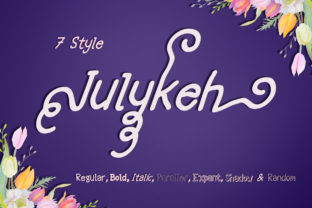
Julykeh: A Handmade Font Family with 7 Distinct Styles
If you have ever searched for a typeface that feels less like a machine output and more like human expression, Julykeh might be exactly what you need. This handmade font family includes seven unique styles, each carrying its own personality while sharing a cohesive, handcrafted origin. Whether you are designing a logo, building a website, preparing classroom materials, or creating social media content, the range within Julykeh offers flexibility without sacrificing character.
Handmade fonts often serve a specific purpose: they bring warmth, imperfection, and authenticity to projects that would otherwise feel sterile. Julykeh takes that concept further by offering multiple stylistic variations within one family. Instead of choosing between a single handwritten look or a more structured alternative, you get seven options that can work together or stand alone depending on the project.
What Makes Julykeh Different from Standard Handmade Fonts
Most handmade font families include one or two styles. Julykeh deliberately offers seven, which changes how you can approach a design. Some of these styles lean toward playful and casual, while others feel more refined or textured. Because they all come from the same handcrafted foundation, they share a visual rhythm that makes mixing them feel intentional rather than chaotic.
For a beginner exploring typography for the first time, this built-in coherence removes a lot of guesswork. You can pair two styles from the same family and trust they will work together. For a seasoned designer, the variety opens up possibilities like creating hierarchical text systems within a single brand identity, where headings, subheadings, and body copy each use a different Julykeh style but still feel part of the same visual language.
The handmade nature also means no two characters are perfectly identical. That slight inconsistency is what gives the font its human feel. In an era where audiences are increasingly drawn to authentic, imperfect visuals, that quality matters more than ever.
Who Benefits from a Multi-Style Handmade Family
Different audiences will find value in different aspects of Julykeh. Rather than one-size-fits-all benefits, the family addresses specific needs depending on what you are trying to accomplish.
Freelancers and Small Business Owners Building a Brand
When you run a small business or freelance operation, every visual decision communicates something about your professionalism and personality. Using a generic system font for your logo or marketing materials can make you blend in. A handmade font like Julykeh signals that you care about craft and attention to detail. With seven styles, you can use one for your logo, another for your website headings, and a third for print materials like brochures or business cards. The result is a cohesive identity that does not require purchasing multiple separate font families.
Cost is also a practical consideration. Instead of buying several fonts from different foundries, you get a full range of styles in one purchase. For a small business owner watching expenses, that kind of value makes a real difference.
Educators and Students Creating Learning Materials
If you teach or create educational content, the readability and warmth of a handmade font can make worksheets, slides, and handouts feel more approachable. Younger learners, in particular, respond well to typefaces that feel less formal. Julykeh offers styles that are clear enough for body text while still carrying a friendly, human quality. You might use a simpler style for reading passages and a more decorative one for titles or activity headers. The variety helps you organize information visually without needing multiple font licenses.
For students working on design projects, experimenting with a font family that has seven distinct styles is a practical way to learn about typographic hierarchy, contrast, and mood. Instead of just picking one font, they can explore how different weights and shapes affect readability and tone.
Content Creators and Social Media Managers
Standing out in a crowded feed often comes down to small visual choices. A handmade font can make your quote cards, thumbnails, and video titles feel more personal and less corporate. With Julykeh, you can rotate between styles to keep your content fresh while maintaining a consistent brand feel. One week you might use a playful style for a lighthearted post, and the next week switch to a more textured style for a behind-the-scenes story. The family gives you range without forcing you to start from scratch every time.
Marketers and bloggers also benefit from the flexibility. If you run a lifestyle blog or an online store, your typography should reflect your voice. A handmade family helps bridge the gap between professional presentation and personal connection.
Practical Ways to Use Julykeh Across Different Projects
Knowing a font exists and knowing how to use it are two different things. Here are some concrete ways different users might put Julykeh to work.
Logo and Branding Work
For a logo, choose one of the more distinctive styles from the family. The handmade quality gives the mark a custom feel without requiring you to hire a lettering artist. Pair it with a clean sans-serif for supporting text, or use a second Julykeh style for taglines. Small business owners selling handmade goods, artisanal products, or personal services will find this approach especially effective.
Website Headings and UI Elements
Using a handmade font for every line of body text on a website can reduce readability. A better approach is to reserve Julykeh for headings, navigation items, and call-to-action buttons. The contrast between a structured body font and a handmade heading creates visual interest while keeping reading comfortable. You can even use different Julykeh styles for different levels of headings, creating a clear hierarchy that still feels cohesive.
Print Materials
Flyers, posters, menus, and invitations benefit from the texture of a handmade font. Because Julykeh includes seven styles, you can create print pieces with multiple levels of information without everything competing for attention. Use a bold style for the headline, a mid-weight style for subheadings, and a simpler style for details like dates or prices. The result looks intentionally designed rather than thrown together.
Social Media Graphics
Quote cards, announcement posts, and promotional graphics often rely on typography to carry the message. A handmade font adds a layer of personality that standard fonts cannot match. Try using one Julykeh style for the main text and another for smaller attribution or context lines. The slight variation keeps the graphic interesting while maintaining a unified look.
How to Evaluate Whether Julykeh Fits Your Project
Not every font works for every purpose, and handmade fonts in particular require some thought before committing. Here are factors to consider based on your specific situation.
Project tone. If your project calls for formal, corporate, or highly clinical visuals, a handmade font may feel out of place. Julykeh shines in contexts that value warmth, creativity, and human connection. Ask yourself whether your audience would respond better to something polished or something personal.
Readability needs. Some of the seven styles are more decorative than others. If you need large blocks of body text to remain highly readable, choose a simpler style from the family or pair Julykeh with a neutral body font. For short text like titles, quotes, and labels, even the more ornate styles work well.
Consistency across materials. One of the strongest arguments for a multi-style family is consistency. If you produce materials across different formats such as web, print, and social media having a single font family that covers multiple use cases simplifies your workflow and strengthens your visual identity.
Learning curve. Beginners will appreciate that the family is easy to install and use right away. There are no complex technical requirements. Experienced users will appreciate the ability to fine-tune spacing, sizing, and pairing choices to achieve a custom look.
Long-Term Value of a Handmade Font Family
Investing time in learning a font family pays off when you can reuse it across multiple projects. Julykeh is not the kind of font you use once and forget. Because it includes seven styles, it can grow with you as your skills and needs evolve. A beginner might start using one style for simple projects and gradually experiment with more combinations. An experienced designer might build an entire brand system around the family.
The handmade quality also ages well. Trends come and go, but authentic, human-made visuals tend to hold their appeal longer than hyper-trendy design gimmicks. If you are building a brand or portfolio you want to feel relevant for years, a font rooted in genuine craft is a solid choice.
For hobbyists and creative explorers, the family offers a playground. You can test how different styles change the mood of a design, experiment with mixing weights, and discover pairings you would not have tried otherwise. That kind of hands-on learning is valuable whether you are designing for fun or building toward a career.
Final Considerations Before Choosing Julykeh
Any font purchase or download should start with a clear understanding of what you need. If your work regularly calls for handmade, warm, or expressive typography, a family with seven styles gives you room to grow. If you mostly need a single reliable font for formal documents, a simpler option might serve you better.
Take time to look at all seven styles and imagine them in your actual projects. Picture your website header in one style, your business card in another, and your social media templates in a third. If that range feels exciting rather than overwhelming, Julykeh is likely a strong match.
Typography is one of those quiet elements that shapes how people perceive your work. Choosing a font with depth, variety, and a human touch can elevate everything you create. Julykeh offers exactly that combination for anyone who values authenticity and flexibility in their visual communication.