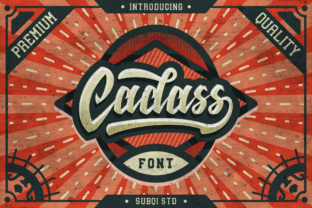
Cadass: The Script Sans Serif Font Duo That Reinvents Vintage for Modern Branding
Typography is no longer a background player in brand design. In an era where first impressions are formed in milliseconds, the typeface you choose communicates as much as the words themselves. Enter Cadass — a stunning Script Sans Serif combination that is bold, daring, and infused with a classic vintage sensibility, yet entirely at home in contemporary workflows. For professionals, creators, and entrepreneurs alike, Cadass represents a shift: the move away from safe, generic typography toward expressive, hybrid font systems that carry meaning and memory. This article explores what Cadass is, why it matters now, and how it fits into broader creative and business trends that are reshaping how we build visual identity.
The Rise of Hybrid Typography in Visual Identity
For years, the typography landscape was divided into clear camps: elegant scripts for luxury and tradition, and clean sans serifs for modernity and readability. But that binary is dissolving. As brands seek to stand out in saturated markets, hybrid typography — the deliberate pairing or fusion of contrasting styles — has emerged as a powerful strategy. Cadass is a prime example of this trend. By combining a flowing script with a structured sans serif, it offers designers a single cohesive system that balances heritage with freshness.
This approach resonates with a broader shift in consumer preferences. Audiences today are drawn to authenticity and character. They want to see the hand of the maker, the warmth of tradition, but they also expect clarity and professionalism. Cadass delivers on both fronts. Its script element evokes the handcrafted charm of vintage signage and packaging, while the sans serif counterpart provides the legibility and versatility needed for digital and print applications. This duality is not just an aesthetic choice — it’s a response to changing expectations around brand storytelling.
How Cadass Bridges the Gap Between Classic and Contemporary
What makes Cadass particularly compelling is the way it reinterprets vintage cues without feeling nostalgic or dated. The script has a natural, flowing rhythm that recalls mid-century lettering, but its proportions and spacing are optimized for modern screens and small-scale uses like labels and apparel graphics. The sans serif, meanwhile, is clean and understated, allowing the script to take center stage when needed, while providing a counterbalance for body text or secondary information.
This balance is critical in industries where brand identity must work across multiple touchpoints. A logotype set in Cadass can appear on a product label, a website hero section, a social media post, and an embroidered patch — and remain recognizable and effective in each context. The font duo’s built-in versatility reduces the need for multiple typefaces, simplifying design systems and ensuring consistency. For agencies and in-house teams managing complex brand ecosystems, this is a tangible efficiency gain.
Consider the example of a small-batch food brand. The script element of Cadass can convey the artisanal, handcrafted quality of the product, while the sans serif can be used for ingredient lists, nutritional information, and website copy. The overall impression is cohesive and intentional — not a patchwork of disparate fonts, but a unified visual language that tells a story from the label to the landing page.
Why Entrepreneurs and Creators Are Turning to Cadass
The growing interest in Cadass reflects deeper changes in how brands are built and marketed. Entrepreneurs and freelancers are increasingly taking on design responsibilities themselves, whether through DIY tools or by collaborating with small studios. They need typefaces that are forgiving, flexible, and expressive — fonts that do a lot of the heavy lifting in terms of personality. Cadass fits this need perfectly. Its bold script commands attention, making it ideal for hero titles and logotypes, while the sans serif ensures the rest of the communication remains professional and readable.
Moreover, the rise of direct-to-consumer (DTC) brands and independent labels has created a demand for typography that feels both bespoke and scalable. A font like Cadass, with its vintage-modern personality, helps new businesses project a sense of heritage and quality without the years of history. It’s a shortcut to credibility, wrapped in a design aesthetic that consumers have come to associate with craftsmanship and care.
Marketers, too, are paying attention. In a landscape where attention spans are shrinking, visual distinctiveness is a key driver of brand recall. Cadass’s bold script is inherently high-contrast — it stands out in feeds, on shelves, and in email headers. This isn’t about decoration; it’s about functional effectiveness. When every pixel competes for attention, a typeface that can cut through the noise is a strategic asset.
Practical Applications Across Industries
Cadass is not a one-trick font duo. Its applications span across industries, each leveraging its dual nature in slightly different ways.
- Logotype Design: The script element of Cadass is strong enough to function as a standalone logotype for brands that want a classic, hand-lettered feel. Paired with the sans serif in a lockup, it creates a balanced identity that works for both formal and casual brands. Coffee shops, bakeries, boutique hotels, and creative studios are natural fits.
- Label Design: Product labels for food, beverages, beauty, and home goods benefit from Cadass’s ability to convey authenticity at small sizes. The script stays legible even when reduced, and the sans serif handles regulatory text and fine print without clutter. This is particularly valuable for craft spirits, organic skincare, and artisanal pantry items.
- Apparel & Merchandise: Screen printing, embroidery, and heat transfer all impose constraints on type design. Cadass’s bold strokes and open counters mean it translates well onto fabric and other materials. T-shirts, hats, totes, and patches become canvases for the brand’s visual identity, with the font duo ensuring consistency across product lines.
- Digital Presence: On websites, landing pages, and social media, Cadass provides a strong contrast between headings (script) and body text (sans serif). This natural hierarchy guides the eye and reinforces brand personality without extra design work. Email headers, presentation decks, and even slide titles gain character when set in Cadass.
- Packaging & Signage: Whether printed on boxes or etched into storefront windows, Cadass maintains its impact at scale. The script’s sweeping strokes read as welcoming and human, while the sans serif anchors the design in clarity. This makes it an excellent choice for retail environments and pop-up activations.
The Broader Context: Typography as a Business Asset
The conversation around Cadass is part of a larger recognition that typography is not just a design detail — it’s a business asset. Brands that invest in distinctive type systems see measurable improvements in recognition, trust, and customer engagement. This is especially true for small and medium businesses that cannot afford massive advertising budgets but can build strong visual identities through consistent, thoughtful design.
Consumers today are visually literate. They notice when a brand uses a generic system font versus a custom or curated typeface. They associate certain styles with certain values: script with warmth and tradition, sans serif with clarity and modernity. Cadass combines both, allowing brands to communicate multiple messages simultaneously. This efficiency is valuable in a world where every brand touchpoint must work harder to earn attention and trust.
Moreover, the trend toward sustainability and slow consumption aligns with the aesthetic Cadass offers. Vintage-inspired design evokes a sense of lasting quality, of products made to be kept and cherished. In an age of fast fashion and fleeting trends, brands that adopt a more timeless visual language signal stability and permanence. Cadass, with its roots in classic lettering but its feet firmly in modern design, is a perfect vehicle for this message.
What Makes Cadass a Strategic Choice for Your Next Project
If you’re evaluating whether Cadass is right for your next project, consider the practical outcomes you want to achieve. Are you launching a product that needs to convey craftsmanship and care? Cadass’s script will do that instantly. Do you need a type system that scales from a tiny label to a billboard without losing its character? The sans serif ensures readability across sizes. Are you working with a small team and need a font duo that reduces decision fatigue? Cadass provides a ready-made pairing that works out of the box.
These are not abstract benefits. They translate directly into faster design cycles, fewer revisions, and more consistent brand expression. For freelancers and agencies juggling multiple clients, a versatile tool like Cadass can be a time-saver. For entrepreneurs building a brand from scratch, it can be a shortcut to a professional, cohesive identity that doesn’t look like everyone else’s.
One practical observation: the best uses of Cadass come when the designer embraces its contrast. Let the script lead in places where emotion and personality matter most — headlines, logos, hero images — and let the sans serif take over for information, navigation, and body copy. This creates a natural rhythm that readers subconsciously follow. It also prevents the script from overwhelming the design, a common pitfall with display-heavy typefaces.
Looking Ahead: The Future of Font Pairing in Design Workflows
As design tools become more accessible and collaborative, the demand for sophisticated yet easy-to-use font systems will only grow. Cadass points toward a future where font duos are not just collections of two typefaces, but integrated design systems with built-in hierarchy, contrast, and emotional range. Designers will increasingly expect their type choices to do more — to carry meaning, to adapt to contexts, to work across media — without requiring extensive customization.
This is part of a larger move toward design systems thinking, where every element of a brand’s visual identity is intentional and interconnected. Typography is a foundational layer of those systems, and choices like Cadass reflect a maturing understanding of what type can achieve. The font duo is not just a stylistic option; it’s a strategic tool for communication, differentiation, and connection.
For professionals, creators, entrepreneurs, marketers, freelancers, and enthusiasts, Cadass represents an opportunity to step away from the generic and toward the distinctive. It’s a reminder that in a world of endless choices, the most powerful ones are those that combine heritage with innovation, boldness with balance, and character with clarity. Whether you’re designing a logotype, a label, an apparel line, or a full brand identity, Cadass offers a foundation that is as functional as it is beautiful — and that, ultimately, is what great typography should do.
In sum, Cadass is not just a font duo. It’s a response to the evolving needs of modern branding: the need for speed without sacrificing quality, for personality without compromising professionalism, for vintage warmth delivered through a contemporary lens. As your next project takes shape, consider what a typeface like Cadass can bring to the table — not just as a design element, but as a partner in telling your brand’s story.