Mainstream Font: A Hand-Lettering Style for Branding and Beyond
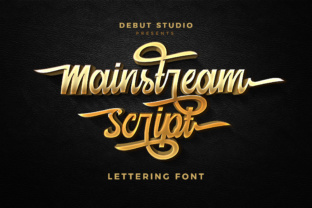
Choosing the right typeface for a brand, logo, or visual identity often involves balancing personality with readability. Many designers find themselves drawn to hand-lettered fonts for their authenticity, but struggle to find one that combines expressiveness with a dependable structure. Mainstream is a modern hand-lettered font designed to bridge that gap. It carries a robust core, meaning its letterforms are built with enough weight and consistency to work in real-world applications while retaining the unique, hand-drawn feel that sets it apart from standard typography.
This article explores what makes Mainstream distinct, how it compares with other font categories, and where it fits best. Whether you are evaluating typefaces for a new brand, a product label, or a digital project, understanding the strengths and limitations of a font like Mainstream can help you make a more practical choice.
What Makes Mainstream Distinct From Standard Fonts
Most traditional fonts are built on geometric or highly uniform principles. Each letter is designed to align perfectly with every other character in the set. Hand-lettered fonts, by contrast, aim to capture the irregularities of natural handwriting. Mainstream falls into this latter category, but with an important difference: its core is robust. The strokes are consistent enough that the font does not feel fragile or overly casual. You get the warmth of a hand-drawn look without sacrificing the reliability needed for legible text.
Key characteristics of Mainstream include:
- Expressive letterforms – Each character carries subtle variations that mimic natural handwriting.
- Strong stroke weight – The font maintains good visibility at both small and medium sizes.
- Modern feel – It avoids the overly decorative or vintage look of some hand-lettered styles.
- Versatile baseline – It works for display purposes, short text blocks, and prominent headlines.
These features make Mainstream a good option when you want a typeface that feels approachable and human, but still professional enough for commercial use. It is not a replacement for a clean sans-serif in body copy, but it excels where tone and personality matter most.
Comparing Mainstream With Other Font Styles
When evaluating Mainstream, it helps to consider how it stacks up against other common font categories. Each style has its own strengths, and the best choice depends on the specific needs of your project.
Mainstream versus clean sans-serif fonts
Sans-serif fonts like Helvetica, Arial, or modern geometric typefaces offer maximum readability and neutrality. They are excellent for large amounts of text, user interfaces, and minimalist branding. However, they can feel impersonal. Mainstream brings a human element that these fonts lack. If your brand or project needs to communicate warmth, creativity, or a handmade quality, Mainstream offers an advantage. On the other hand, if you need absolute neutrality or high legibility at very small sizes, a clean sans-serif remains the safer choice.
Mainstream versus decorative or display fonts
Highly decorative fonts often trade usability for visual impact. They may be unreadable at small sizes or difficult to pair with other typefaces. Mainstream sits between a standard display font and a more conventional typeface. It has enough personality to stand out in a logo or headline, but it does not overwhelm the reader. This makes it more adaptable than many display fonts. You can use it for a tagline, a product name, or even a short paragraph without losing clarity.
Mainstream versus traditional hand-lettered fonts
Some hand-lettered fonts lean heavily into irregularity. Strokes may vary wildly, characters may not align well, and the overall effect can feel messy. Mainstream differentiates itself with a robust core. The weight and spacing are controlled enough that the font reads smoothly. This makes it a better choice for branding where consistency matters. If you are designing a logotype that needs to appear across multiple media, Mainstream gives you the hand-drawn character without the unpredictability that sometimes comes with other hand-lettered options.
Strengths of Mainstream in Real Projects
Understanding where Mainstream performs best can guide your decision. Based on its design characteristics, several use cases stand out.
- Logotype and branding – The font’s expressive nature makes it ideal for creating a memorable brand mark. It works especially well for businesses in creative fields, food and beverage, lifestyle, and boutique services.
- Product packaging – Labels, tags, and packaging often benefit from a hand-lettered look that suggests craftsmanship. Mainstream’s strong strokes hold up well on physical materials.
- Headlines and hero text – In web design or print, a bold headline using Mainstream can draw attention without needing additional decorative elements.
- Social media graphics – Short quotes, announcements, and promotional text appear more personal when set in a hand-lettered style.
One practical example: a small-batch coffee roaster might use Mainstream for its logo and bag labels. The font’s warmth aligns with the artisanal nature of the product, while its robustness ensures the text remains legible even when printed small on packaging. A tech startup, by contrast, might prefer a clean sans-serif to project efficiency and precision. The context matters.
Limitations and Tradeoffs to Consider
No font works for every situation, and Mainstream is no exception. Being aware of its limitations helps you avoid misapplication.
Not ideal for long body text. Like most hand-lettered fonts, Mainstream is not optimized for extended reading. The irregularities that give it personality can cause fatigue when used in paragraphs. Reserve it for short blocks or display purposes.
Limited character set variations. Some hand-lettered fonts come with multiple alternates or stylistic sets. Depending on the version you choose, Mainstream may have fewer options for customizing the appearance. If you need extensive glyph variations, check the font’s full character set before committing.
Pairing challenges. Because Mainstream has a strong personality, it requires careful pairing with a more neutral font for supporting text. A simple sans-serif or serif usually works best. Avoid pairing it with another highly decorative typeface, as the result can feel chaotic.
Not for very small sizes. At extremely small sizes, the hand-drawn details may become indistinct or muddy. If your project requires text below 10 points, test Mainstream at that size to ensure readability.
These tradeoffs do not diminish the font’s value, but they define its best-fit scenarios. Knowing when to use Mainstream and when to choose a different option is part of making an informed decision.
When Mainstream Is the Right Choice
Based on its characteristics, Mainstream is a strong candidate in several scenarios:
- You are creating a brand identity that values authenticity and human touch.
- Your project involves short, impactful text rather than long-form reading.
- You want a hand-lettered look but need reliable legibility across different media.
- You are working in industries like food, beverage, fashion, wellness, creative services, or lifestyle products.
- You need a font that works both in print and on screen without losing its character.
If these conditions match your project, Mainstream deserves serious consideration. It offers a practical middle ground between the sterility of standard fonts and the unpredictability of overly casual hand-lettering.
When You May Need an Alternative
There are also clear cases where another type of font would serve you better:
- Your project relies on heavy body text, such as in books, articles, or long-form reports.
- You need a highly neutral, unobtrusive typeface for a corporate or institutional brand.
- Your design requires extensive multilingual support with diacritics and special characters that may not be fully covered.
- You are working at very small sizes where fine details matter.
- Your brand voice is minimal, modern, or tech-oriented rather than warm or artisanal.
In these situations, a clean sans-serif or a simple serif font will likely outperform Mainstream. The goal is not to force a font into a role it was not designed for, but to match the tool to the task.
Practical Tips for Using Mainstream Effectively
If you decide to use Mainstream, a few practical steps can help you get the most out of it.
Test at multiple sizes. Before finalizing your design, view the font at the actual sizes it will appear. Check both large headlines and smaller supporting text to ensure clarity.
Pair with a neutral companion font. Choose a simple sans-serif or serif for body copy and secondary elements. This lets Mainstream stand out without competing for attention.
Use adequate spacing. Hand-lettered fonts often benefit from generous letter spacing and line height. This improves readability and gives the text room to breathe.
Limit its use to key elements. Let Mainstream carry the personality in headlines, logos, and callouts. Reserve other fonts for the bulk of your text. This approach creates hierarchy and visual interest without overwhelming the reader.
Check print and digital rendering. A font may look different on screen versus in print. Test Mainstream in both environments to confirm that it meets your quality standards.
Final Considerations for Your Decision
Mainstream is a thoughtfully designed hand-lettered font that balances expressiveness with a robust core. It is not a one-size-fits-all solution, but it fills a specific niche well. For branding, logotype work, packaging, and display text where you want a human touch, it offers a reliable and attractive option. Compared to other hand-lettered styles, its consistency and strength set it apart. Compared to standard fonts, it brings a level of warmth that can make a brand feel more approachable.
The best choice always depends on your project’s goals, audience, and context. By understanding what Mainstream does well and where its limitations lie, you can decide whether it fits your needs or whether a different typeface would serve you better. In either case, taking the time to evaluate your options carefully will lead to a stronger, more effective design.