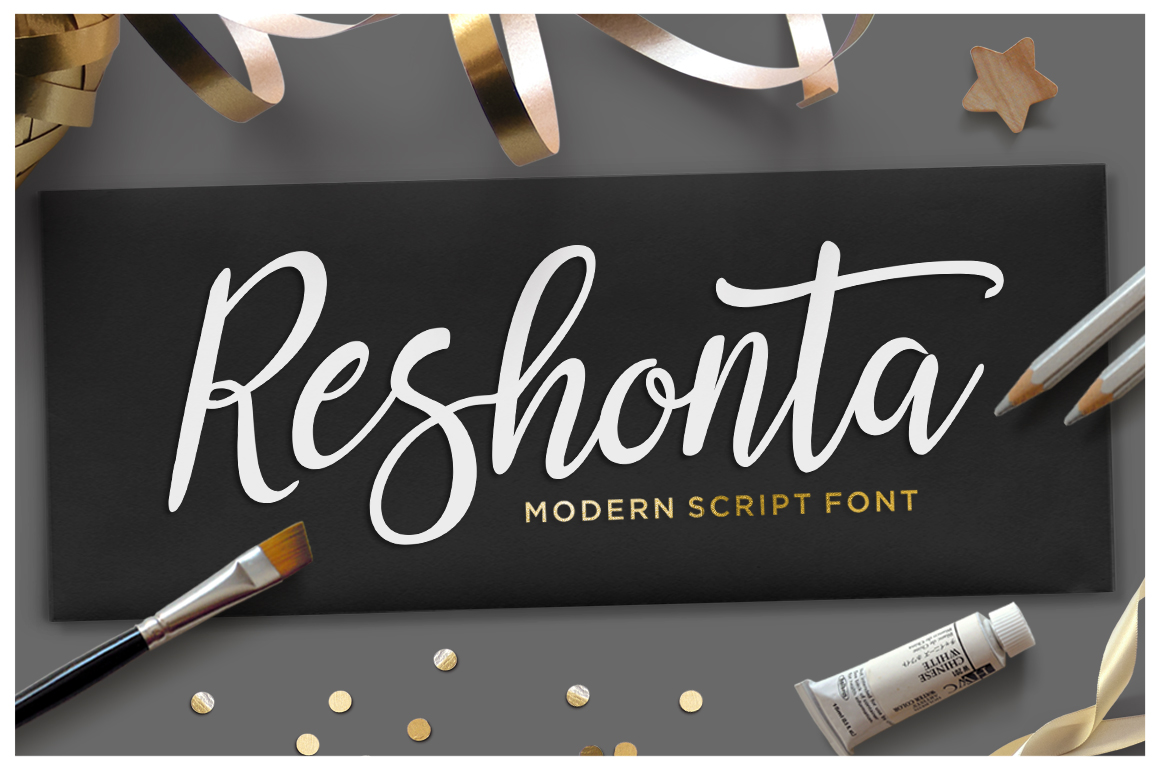
Reshonta: A Hand-Painted Calligraphic Font That Feels Human
You know that moment when you see a sign, a logo, or a social media post, and something about it just feels right? Like someone actually took the time to make it by hand, rather than just clicking a button. That’s exactly the energy Reshonta brings. It started as hand-painted lettering, painstakingly crafted stroke by stroke, before being carefully digitized into a bold handwritten font with a calligraphic edge. But what does that mean for someone like you who’s looking for something real to use in their next project? Let’s walk through the scenarios where Reshonta shines—and where it might not be the perfect fit.
What Reshonta Actually Is (And Why It’s Different)
At its core, Reshonta is a font that refuses to look like a font. It doesn’t have that sterile, perfectly repeated curve you get from standard typefaces. Each character carries subtle irregularities—the kind you’d expect from a paintbrush meeting paper. The strokes are bold, confident, and slightly unpredictable, giving it a calligraphic flow that feels more like someone wrote it in the moment than generated it from a file. For anyone tired of the cookie-cutter look that dominates so much modern design, this is a breath of fresh air.
Branding for Small Shops and Cafés
Imagine you’re helping a friend who runs a small coffee roastery. They want their labels to feel warm, approachable, and artisanal. A standard sans-serif might come off too corporate, while a script font can feel fussy. Reshonta sits right in the middle. It’s bold enough to catch attention on a shelf, but loose enough to say, “We actually care about the beans and the people roasting them.” Pair it with a simple clean font for the nutritional info, and you’ve got a label that tells a story before anyone even reads a word.
Social Media Content That Stops the Scroll
Scrolling through Instagram or Pinterest, you’ll notice the posts that make you pause often have one thing in common: text that feels handmade. Whether it’s an inspirational quote, a product announcement, or a behind-the-scenes caption overlay, Reshonta adds a layer of authenticity. A bold calligraphic phrase like “Sunday mornings” over a photo of pancakes isn’t just text—it’s a mood. Content creators, especially in the lifestyle and food niches, find that this font helps their posts feel less like ads and more like personal stories.
Event Branding and Wedding Stationery
Weddings, gallery openings, and launch parties all need a visual identity that sets a tone. Reshonta works beautifully for save-the-dates, menus, and signage because it carries a handcrafted feel without looking like it took hours to write (even though it kind of did). For example, a wedding welcome sign that reads “Together is our favorite place” in Reshonta feels intimate and deliberate. It doesn’t scream “I hired a designer”—it whispers “We put thought into this.” That emotional connection is hard to achieve with most digital fonts.
Product Packaging in Beauty and Wellness
Walk down the skincare aisle and count how many bottles use clean, minimalist typography. Now count how many use something with warmth. The brands that stand out often use handwritten elements. A face oil bottle with “Glow” written in Reshonta feels more like a friend recommending something than a corporation selling it. This font works well on labels where you want to communicate natural, organic, or handcrafted values without saying a word.
Digital Products and Printables
If you sell planners, wall art, or digital courses on platforms like Etsy or Gumroad, Reshonta can be your go-to for titles and headers. A weekly planner with “This Week” written in that bold calligraphic style immediately feels more inviting than something typed in Arial. Buyers perceive more value when the design feels intentional, and that perception often translates to fewer returns and higher ratings.
Who Benefits Most from Using Reshonta?
The beauty of this font is that it doesn’t belong to one industry. Small business owners use it to give their brand a human face. Graphic designers use it when they need a headline that carries emotion without being decorative fluff. Content creators use it to inject personality into thumbnails and overlays. Even hobbyists—people making birthday banners or scrapbooks—find that Reshonta elevates their projects from “homemade” to “handcrafted.”
But here’s a practical observation: it works best for people who want their message to feel immediate and personal. If you’re trying to convey authority or clinical precision, this probably isn’t your first choice. But if you want warmth, authenticity, and a dash of artistic flair, it’s hard to beat.
Legibility at Small Sizes
Let’s be upfront: Reshonta is bold and expressive, and that comes with tradeoffs. At very small sizes—say, 10pt or below—some of the finer calligraphic details can blur together, especially on screens. If you’re designing something like a business card with tiny contact info, you’ll want to pair it with a simpler font for the small stuff. Reserve Reshonta for headings, names, or short phrases where it has room to breathe.
Pairing with Other Fonts
This isn’t the font you want to use for entire paragraphs. It’s a display face, meant to command attention in short bursts. The trick is to find a clean, neutral companion font—something like a regular sans-serif or a simple serif—to handle the body text. Try using Reshonta for the main headline, then a subtle font like Open Sans or Lora for the details. The contrast creates visual interest without overwhelming the reader.
Digital vs. Print Performance
In print, Reshonta truly comes alive. The bold strokes and slight irregularities catch the light, especially if you’re using it on a matte or textured paper. On screens, it still performs well, but you’ll need to pay attention to resolution. For social media graphics, export at high resolution to avoid jagged edges. For web use, make sure your file format supports proper rendering—SVG or WOFF2 tends to be safer than older formats.
Licensing and File Formats
Before you run off and use Reshonta in a commercial project, double-check the licensing terms. Some hand-drawn fonts have restrictions on how many impressions you can make or whether you can embed them in apps. Also confirm you’re getting the right file format for your workflow: OTF for print and graphic design, TTF for general digital use, and WOFF for the web. The good news is that many foundries offer extended licenses for a one-time fee, so it’s worth investing in the right one upfront.
Strengths That Make Reshonta Stand Out
- Emotional resonance: Few fonts make people feel something before they even read the words. Reshonta does that naturally because it mimics human touch.
- Versatility within its lane: It works across print, digital, branding, and personal projects. You just have to know where it fits.
- Time-saving authenticity: Getting that hand-painted look normally takes hours with a brush and scanner. Reshonta gives you the same aesthetic in seconds.
Potential Limitations to Keep in Mind
- Not for body text: This is a display font through and through. Using it for long blocks will tire the reader’s eye.
- May not suit formal contexts: Law firms, medical clinics, or corporate annual reports probably aren’t the right fit. It’s too human for that kind of formality.
- Character set variance: Some hand-drawn fonts have limited special characters or language support. Check if Reshonta covers the glyphs you need before committing.
Practical Examples of Reshonta in Action
Let’s bring this to life with a few concrete scenarios:
- A bakery menu: Use Reshonta for “Today’s Pastries” and a simple sans-serif for the list. The contrast feels cozy and readable at the same time.
- A YouTube channel banner: Your channel name in Reshonta over a lifestyle shot says “I’m creative and approachable” in one glance.
- A gift tag for handmade soap: Write “Thank you” in Reshonta and it looks like you personally addressed each one—even if you printed a hundred.
- A podcast cover art: The title in Reshonta combined with a minimalist background gives off a narrative, story-driven vibe that invites listeners in.
In each case, the font does the heavy lifting of establishing tone before anyone reads a single word.
Choosing Between Reshonta and Alternatives
You might be wondering, “Why Reshonta over other handwritten fonts?” The answer comes down to the balance between boldness and flow. Many handwritten fonts are either too delicate (they look like fine print) or too heavy (they lack rhythm). Reshonta sits in that sweet spot where the strokes are thick enough to command attention but textured enough to feel natural. If you’ve ever tried a brush script that just felt too perfect, or a casual font that looked sloppy, Reshonta offers a middle ground that’s intentional without being sterile.
If you’re comparing it to other hand-painted fonts, pay attention to the baseline consistency. Some fonts have wild variation in line height that makes them hard to use in multi-word phrases. Reshonta tends to keep a more predictable structure while still preserving that hand-drawn character, which makes it easier to integrate into layouts without constant tweaking.
Final Thoughts on Making Reshonta Work for You
The best way to know if Reshonta is right for your project is to try it in context. Drop it into a mockup, print a sample, or overlay it on a photo. See how it interacts with other elements. Does it add the warmth you’re looking for? Does it feel like it belongs, or does it fight for attention? Those are the questions that will guide your decision more than any spec sheet.
Remember that fonts are tools, and the best tools are the ones that disappear into the work. Reshonta has a way of doing that—it feels less like a typeface and more like an extension of the person using it. Whether you’re building a brand, decorating a page, or just trying to make something that feels real, that human quality is what makes it worth trying.