Revallyna: A Modern Calligraphic Font with 320 Unique Characters
When selecting a typeface for a design project, the balance between readability and personality often determines success. A font that leans too far into decorative flair may sacrifice legibility, while a purely utilitarian choice can feel flat. Revallyna, a modern calligraphic font designed by Unicode, aims to bridge that gap by combining playful, handwritten aesthetics with a substantial glyph set. This article examines what Revallyna offers, where it performs well, and when other options might serve you better.
What Is Revallyna?
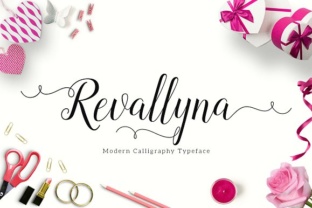
Revallyna is a fun, contemporary calligraphic typeface built around the idea of expressive, fluid letterforms. Unlike traditional calligraphy fonts that often reproduce historical scripts, Revallyna adopts a more relaxed, informal stroke structure. Its design suggests a modern brush or pen style, with varying stroke widths and occasional swashes that give text a handcrafted feel. The font includes 320 unique characters and glyphs, covering standard Latin letters, numerals, punctuation, and a range of ligatures and stylistic alternates. This breadth allows for more typographic variety without switching fonts mid-project.
Why Consider Revallyna for Your Project?
The initial appeal of Revallyna lies in its personality. For designers who want to infuse warmth, approachability, or a sense of spontaneity into their work, a calligraphic font like this can be a natural choice. The 320 glyphs mean you have multiple versions of certain letters, which helps avoid the repetitive look that sometimes plagues simpler handwriting fonts. This feature is particularly valuable for longer text blocks that still need to feel organic.
Another reason to evaluate Revallyna is its Unicode compatibility. Because it is built around Unicode standards, it integrates smoothly across different operating systems and software platforms without character corruption. This reliability matters if you are producing digital content that must render correctly on various devices or if you collaborate with others who may not have the font installed—though they would still need the font file for full effect.
Benefits and Tradeoffs of Using Revallyna
Every typeface presents a set of strengths and compromises. Revallyna is no exception, and understanding these can help you decide whether it aligns with your goals.
Benefits
- Visual distinction: The modern calligraphic style stands out in a crowded visual landscape. It can make headings, invitations, social media graphics, or branding elements look more custom and less generic.
- Glyph variety: With 320 unique characters, you have room to create dynamic typography. Alternates and ligatures let you fine-tune letter combinations to avoid awkward collisions or too much uniformity.
- Readable at moderate sizes: Unlike some highly decorative script fonts, Revallyna retains decent clarity at medium to large sizes. The stroke contrast is not extreme, which reduces fatigue when reading short to medium-length passages.
- Cross-platform consistency: Unicode foundation means fewer encoding surprises in web or mobile environments, though actual rendering still depends on font embedding or loading.
Tradeoffs and Considerations
- Not ideal for extended body text: The calligraphic nature, even with a modern twist, can become tiring on the eyes for long paragraphs. Small point sizes may blur the delicate stroke variations. If your project includes dense reading, a simple serif or sans-serif font is usually more practical.
- Limited formal tone: Revallyna leans casual and playful. For corporate reports, legal documents, or any context requiring strict professionalism, its character may feel out of place. It excels in settings where personality is welcome.
- Font file and licensing: Because it is created by Unicode (an organization known for text standards rather than typeface retail), you should verify the exact licensing terms. Some Unicode-proximate fonts are distributed freely, while others may require purchase or attribution. Confirm before committing to a project.
- Potential usability with complex layouts: The swashes and alternate glyphs, while attractive, can interfere with tight grid systems or multi-column text. Designers may need extra time adjusting kerning or manually selecting glyphs to achieve consistent rhythm.
When Revallyna Is a Strong Fit
Certain project types complement Revallyna’s characteristics. If any of the following describe your work, this font deserves serious consideration:
- Event branding and invitations – Weddings, parties, galas, or community events where a celebratory, hand-lettered feel is appropriate. The multiple glyphs help give each piece a bespoke appearance.
- Social media graphics and quotes – Posts that rely on short, impactful text often benefit from a font that adds texture. Revallyna’s visibility at larger sizes works well for Instagram stories, Pinterest pins, or YouTube thumbnails.
- Creative product packaging – Products targeting a younger or design-conscious audience can use Revallyna to convey creativity and authenticity. Think boutique food items, handmade goods, or art supplies.
- Logos and wordmarks – For small businesses, artists, or freelancers whose brand identity emphasizes originality, a calligraphic font can serve as a distinctive logotype. The variation in glyphs also allows for unique lockups.
- Short-form editorial content – Magazine pull quotes, section headers, or introductory paragraphs in lifestyle publications gain a human touch without losing readability entirely.
Situations Where Alternatives May Be Worth Considering
Not every design scenario will benefit from Revallyna. In the following cases, exploring other fonts could yield better results:
- Long-form reading – For ebooks, articles, or reports exceeding a few paragraphs, a text-optimized typeface with consistent stroke width is kinder to readers. Look at fonts like Inter, Lora, or Open Sans instead.
- Formal business applications – Annual reports, investor decks, or official correspondence typically require a more restrained visual tone. A clean sans-serif (e.g., Helvetica, Roboto) or a classic serif (e.g., Times New Roman, Garamond) would feel more appropriate.
- Multilingual or non-Latin content – Revallyna likely supports the Latin script well, but its character coverage for Cyrillic, Greek, or CJK characters is probably limited. If your project needs extensive multilingual support, check the glyph set first or pick a font designed for global use.
- Constraint-heavy grid layouts – When you need tight control over line spacing, alignment, and kerning across many elements, a more uniform font reduces manual adjustments. Revallyna’s variable forms can complicate automated typesetting.
- Ultra-small sizes – In applications like footnotes, captions, or phone interface elements, the fine details of a calligraphic font may degrade or become unclear. Opt for a font optimized for low-resolution or small-scale rendering.
Practical Decision-Making Insights
To decide whether Revallyna fits your needs, start by clarifying the primary role of the text. Ask yourself:
- Is the text meant to be looked at or read thoroughly? If the answer is “looked at” – as in headlines, logos, or decorative elements – Revallyna’s expressive style is a solid choice. If the text must be read comfortably for minutes, look elsewhere for body copy and use Revallyna only for accents.
- How much text will appear in the font? A few words or a short phrase? Revallyna will shine. A full page of text? The visual energy may become exhausting.
- What tone does the project require? If you need friendly, informal, or artistic, Revallyna adds value. If you need authority, precision, or restraint, a more neutral font serves better.
- Do you have the time to customize? Taking advantage of the 320 glyphs means manually selecting alternates, adjusting kerning, and testing different combinations. If your workflow is fast-paced or you rely on auto-typesetting, the font’s variability could be a hindrance rather than an asset.
- What is your audience’s context? A younger, creative audience may appreciate the handcrafted vibe. A corporate client or older demographic might perceive it as unprofessional. Gauge your readers’ expectations.
Testing is also crucial. Before finalizing, render Revallyna at your target sizes – both in print and on screen – and view it under real conditions. Check how it looks in combination with your chosen body font, and confirm that the licensing covers your usage (commercial, web embedding, etc.). Because Unicode is a standards organization, the font’s distribution path might differ from typical foundries; download it from the official source and read the license carefully.
Ultimately, Revallyna is a specialized tool rather than a universal solution. Its modern calligraphic aesthetic and generous glyph set make it a compelling option for projects that prioritize visual uniqueness and human warmth. By matching its strengths to appropriate contexts and acknowledging its limitations in longer or more formal settings, you can make an informed decision about whether this font adds the right character to your work.