Skulk: A Decorative Serif Font with Purposeful Swashes
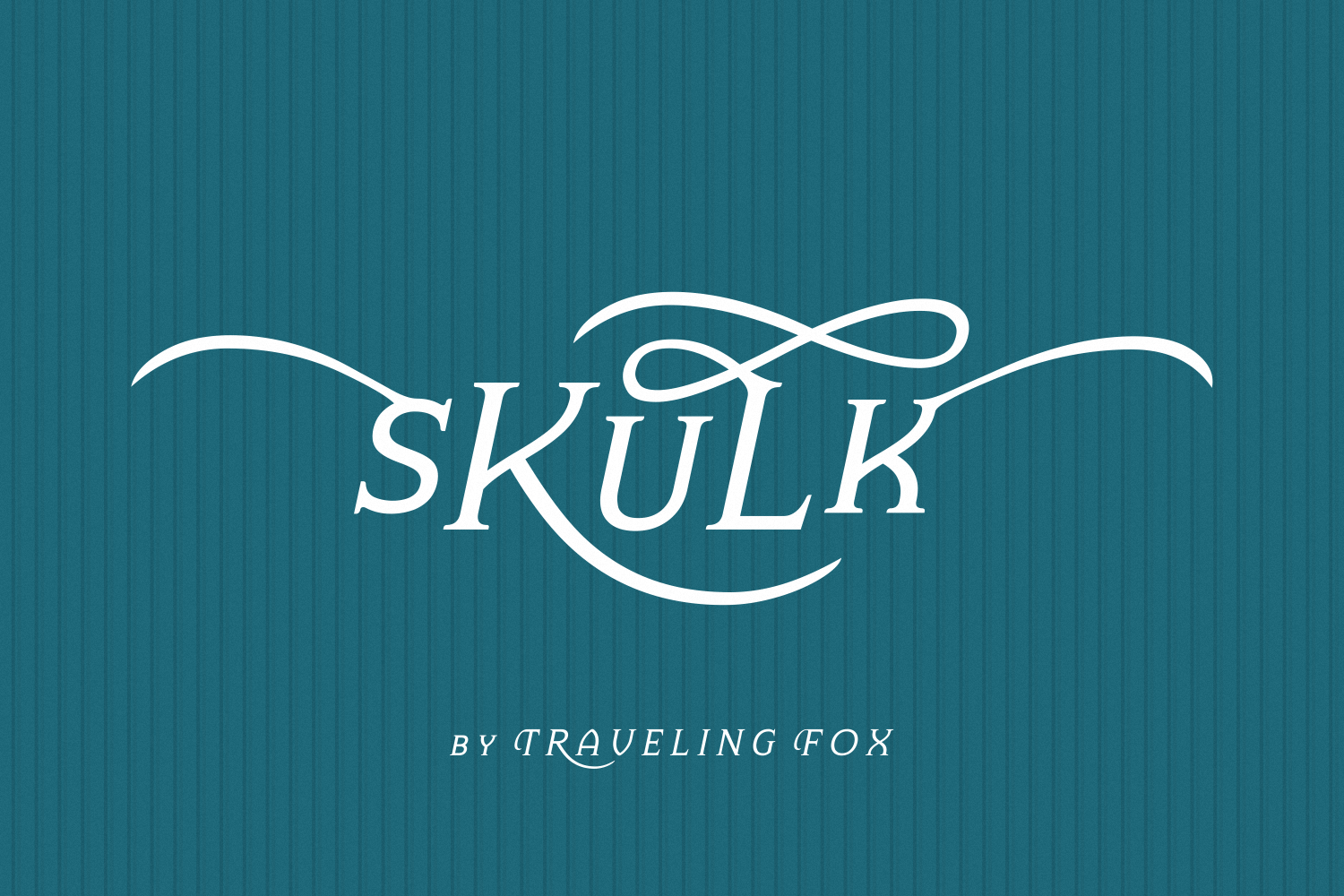
Typography decisions often come down to a trade-off between readability and visual impact. Many display fonts lean heavily into one direction, offering either clean legibility or elaborate ornamentation, but rarely both in a single, cohesive package. Skulk takes a different approach. It is a decorative all-caps serif typeface that includes decorative swashes as an integral part of the design, yet it also provides basic glyph forms and small-caps alternatives for every character. This flexibility means you are not locked into a single stylistic mode. You can choose how much ornamentation to apply, and you can do so without switching fonts or struggling with complex OpenType features.
The font is designed for settings where standard serif faces feel too plain and heavily scripted display fonts feel too ornate. Skulk sits in a productive middle ground. Its serif structure gives it a grounded, traditional foundation, while the optional swashes add a layer of decorative flair that can elevate headlines, logos, packaging, and editorial layouts. The all-caps format reinforces a sense of authority and presence, making it suitable for titles, short headings, and branding elements where uppercase text is standard. For designers, marketers, and content creators who work across print and digital media, Skulk offers a practical tool for achieving a polished, distinctive look without spending hours manually adjusting letterforms.
What Makes Skulk Worth Discussing
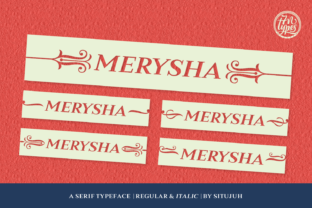
Many decorative serif fonts treat swashes as an afterthought or bury them in hard-to-access stylistic sets. Skulk addresses this by making swashes readily accessible for every glyph. Each uppercase letter has a basic form without swashes, a swashed version, and a small-caps variant. This tripartite structure is not common among display typefaces, and it gives the user granular control over the final appearance. If you need a clean, readable word for a subheading, you use the basic forms. If you want a dramatic drop cap or a logo mark, you activate the swashes. If you need a compact, uniform texture for a block of text, the small-caps are there.
This level of built-in versatility reduces the need to pair Skulk with multiple complementary fonts for a single project. You can achieve variation within the typeface itself. From a workflow perspective, that saves time and reduces the risk of inconsistent styling. The swashes themselves are not arbitrary flourishes. They follow the stroke logic of the serif letterforms, which means they integrate smoothly rather than looking like decorative add-ons pasted onto otherwise plain characters. The result is a cohesive visual system where the ornamental elements feel native to the design.
Another factor worth noting is the all-caps constraint. This is not a font for body copy or mixed-case prose. It is a display face, and it works best when used at larger sizes where the serif details and swashes remain visible. Understanding this limitation is key to using Skulk effectively. It is not a replacement for a workhorse serif like Garamond or Caslon. It is a specialized tool for specific applications, and recognizing that distinction will help you deploy it where it delivers the most impact.
Key Characteristics and Practical Strengths
Skulk’s serif structure is rooted in old-style and transitional forms, with moderate contrast between thick and thin strokes. The terminals are sharp, and the serifs are bracketed, giving the letters a refined but not fragile appearance. Because the typeface is all caps, the designers have adjusted proportions to ensure that letters with swashes remain balanced within a word. The swashes typically extend from the beginning or ending strokes of a letter, and sometimes from descender-like elements in letters such as Q or R. This keeps the overall word shape intact and avoids the clutter that can occur when every character in a string is heavily ornamented.
From a usability standpoint, the small-caps feature is a significant advantage. Small caps allow you to maintain the uppercase aesthetic while reducing the visual weight of secondary text. This is especially useful for subheadings, bylines, captions, or any situation where you want a hierarchical shift without introducing a second font. The small-caps in Skulk retain the same serif detailing and proportional spacing as the full uppercase forms, so the typographic color remains consistent across different levels of text.
The swashes themselves are varied. Some letters have simple, single-stroke flourishes, while others feature more complex loops and curves. This variation prevents monotony when using the font across multiple lines or in a multi-word headline. You can selectively apply swashes to certain letters and not others, creating a custom look for each project. Because the swashes are accessible through standard OpenType features, they work in most major design applications, including Adobe InDesign, Illustrator, Photoshop, and Affinity Publisher, as well as in web-based tools that support OpenType styling.
For print projects, Skulk performs well at sizes between 18 and 72 points, depending on the medium. At smaller sizes, the swashes can become visually busy, especially on uncoated paper stocks where ink spread is a concern. At larger sizes, the details remain crisp and the decorative elements read clearly. In digital environments, the font renders well on high-resolution screens, but it is not optimized for body text on standard displays. If you are using it for web headings, ensure your heading sizes are large enough to preserve the serif and swash details.
Who Benefits Most from Skulk
Professionals working in branding and identity will find Skulk useful for logo design, particularly for businesses that want a classic yet distinctive mark. The ability to mix basic forms and swashes within a single wordmark gives designers flexibility to create a unique lockup without relying on custom lettering. Small business owners and entrepreneurs who handle their own design work can use Skulk to produce professional-looking materials without needing deep typographic expertise. The font’s built-in variations mean you can experiment with different looks by toggling swashes on and off, rather than searching for a different font each time you want a different effect.
Marketers and content creators who produce social media graphics, presentation slides, and digital ads can use Skulk for short, impactful headlines. Its all-caps nature and decorative potential make it effective for calls to action, event titles, and promotional banners. The font also works well in editorial contexts, such as magazine covers, feature article headings, and pull quotes, where a touch of ornamentation adds visual interest without overwhelming the layout.
Educators and publishers who produce materials with a formal or traditional tone may find Skulk appropriate for title pages, chapter headings, and certificates. Its serif foundation lends a sense of authority, while the optional swashes provide a ceremonial quality. For wedding invitations, event programs, and formal announcements, Skulk can replace more predictable script fonts, offering a structured but still decorative alternative.
Freelancers and serious hobbyists who work on personal projects, such as custom stationery, branding for side businesses, or creative portfolios, will appreciate the font’s versatility. Because Skulk includes basic forms and small-caps, it can serve as a standalone typeface for a range of headings within a single project. This reduces the need to purchase or manage multiple fonts, which is particularly valuable for those with limited budgets or who prefer a streamlined font library.
Practical Considerations and Possible Limitations
Skulk is not a font for long-form reading. Its all-caps structure and decorative elements make it unsuitable for paragraphs, instructional text, or any context where extended readability is required. Users who attempt to set body copy in Skulk will find the text difficult to read and visually exhausting. The font is designed for display use, and that is where it should stay.
The swashes, while attractive, require thoughtful application. In a word with many letters, activating swashes on every character can create a cluttered, illegible result. Selective use is essential. A good rule of thumb is to apply swashes to one or two letters per word, typically the first and last, or to letters with natural entry and exit strokes. Overuse diminishes the impact and can make the text appear chaotic.
For users who are less experienced with OpenType features, accessing the swashes and small-caps may require a brief learning curve. Most design applications have a dedicated OpenType panel or a glyphs palette where you can select alternate characters. Some simpler tools, such as basic word processors or online design platforms with limited typography controls, may not support OpenType styling, in which case the swashes will not be available. If your workflow relies on such tools, verify compatibility before purchasing Skulk.
Another factor to consider is licensing. Skulk, like most commercial fonts, is sold under specific licenses that dictate how and where you can use it. If you are a designer working for multiple clients, check whether the license covers commercial projects, web use, and embedding in digital products. Some licenses may restrict the number of users or require additional fees for broad distribution. Reading the license terms carefully will prevent legal issues down the line.
From a long-term value perspective, Skulk is a font that will remain useful as long as its stylistic niche remains relevant. Because it leans on traditional serif structures rather than trend-driven shapes, it is less likely to look dated compared to fonts that rely on contemporary gimmicks. The swashes add a decorative quality that can be toned up or down, allowing the typeface to adapt to evolving design tastes. For those who build a font library over time, Skulk occupies a specific role that is not easily filled by other typefaces.
Final Observations on Skulk
Skulk succeeds by offering a practical balance between structure and ornamentation. It does not force you into a fully decorative mode. Instead, it provides options, and that is what separates it from many other display serifs. The basic forms are clean and usable, the small-caps offer flexibility, and the swashes deliver visual impact when you need it. For professionals who value efficiency and control, this tripartite design is a genuine advantage.
If your work regularly involves all-caps headlines, branding, or formal display typography, Skulk is worth considering. It is not a font for every project, but for the projects where it fits, it performs well and looks distinctive. The key is to use it selectively, respect its display-only nature, and apply swashes with restraint. When used correctly, Skulk can elevate a layout without dominating it, which is exactly what a good display font should do.