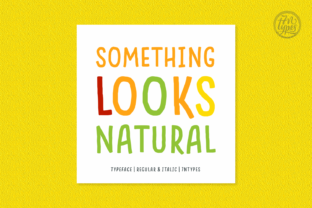
Something Looks Natural: A Playful Typeface for Light-Hearted Design
Typography is one of those quiet forces in design that shapes how we feel before we even read a word. It sets the mood, hints at personality, and can make a project feel approachable or distant, formal or whimsical. That is why when a typeface like Something Looks Natural enters the scene, it invites attention not because it shouts, but because it smiles. This typeface doesn't try to blend in with the crowd of serious, neutral fonts. Instead, it leans into playfulness and charm while still retaining enough structure to be genuinely useful across a range of creative and professional projects.
Whether you are designing a brand identity for a small business, crafting social media posts, working on a children's book, or simply looking for a font that adds warmth to your personal projects, Something Looks Natural offers something refreshing. The name itself hints at its character: a typeface that feels organic, unforced, and delightfully human. It does not try too hard to impress, yet it leaves an impression. That is a rare balance in typography, and it is precisely what makes this font worth exploring in more detail.
The Two Faces of Something Looks Natural: Regular and Italic
One of the first things to know about Something Looks Natural is that it comes in two variants: Regular and Italic. At first glance, that might seem simple, but the distinction matters more than you might expect. The Regular variant carries the core personality of the typeface. It is playful, fun, and slightly irregular in a way that mimics hand-lettering or natural writing. The letters feel alive, as if they were drawn by a human hand rather than generated by a machine. There is an energy to them that feels spontaneous, which is exactly what makes the font suitable for projects where you want to communicate joy, creativity, or a light-hearted tone.
The Italic variant, on the other hand, adds a layer of movement and elegance. It does not simply tilt the letters mechanically. Instead, it introduces a genuine cursive flow that still carries that same playful spirit. This variant works beautifully when you want to emphasize certain words or phrases without breaking the overall mood of the design. For example, you might use the Regular variant for headlines and body text, then switch to Italic for callouts, quotes, or subheadings that need to stand out gently. Together, the two variants give you enough flexibility to build a cohesive visual language without needing to rely on multiple different typefaces.
What Makes Something Looks Natural So Playful and Fun
Playfulness in typography is not just about adding loops or flourishes. It is about rhythm, proportion, and the small imperfections that make letterforms feel human. Something Looks Natural achieves this through subtle irregularities in stroke thickness, slightly uneven baselines, and a general sense of looseness that avoids the rigidity of many modern fonts. When you look at a word set in this typeface, you get the impression that someone sat down with a pen and simply wrote it out with a smile on their face. That emotional quality is hard to engineer, but this font pulls it off effortlessly.
Another aspect that contributes to its playful character is the generous spacing and open letterforms. The font does not feel cramped or crowded, which makes it highly readable even at smaller sizes. This is important because playful fonts sometimes sacrifice readability for style. Something Looks Natural manages to preserve clarity while still feeling expressive. Each letter has room to breathe, and that openness adds to the overall lightness of the design. Whether you set it in a bold headline or a short paragraph, the typeface retains its cheerful personality without becoming chaotic or hard to read.
Real-World Scenarios: Where Something Looks Natural Shines
Understanding the character of a typeface is one thing, but knowing where to use it effectively is another. Something Looks Natural is not a one-size-fits-all solution, but it excels in several specific contexts. Let us walk through a few real-world scenarios where this font can make a meaningful difference.
- Small Business Branding: Imagine a local bakery, a handmade soap company, or a boutique children's clothing store. These businesses thrive on warmth, approachability, and personality. Using Something Looks Natural in their logo, signage, or packaging instantly communicates that they are not a faceless corporation. The typeface feels artisanal and personal, which aligns perfectly with brands that want to emphasize craftsmanship and care.
- Social Media Content: Social media is crowded, and standing out often requires a visual identity that feels authentic. Many creators and small businesses use consistent typography to build recognition. Something Looks Natural works beautifully for Instagram stories, Pinterest pins, or Facebook posts where you want to add a friendly, inviting touch. Its playful nature helps content feel less like an ad and more like a message from a friend.
- Children's Books and Educational Materials: Kids respond well to typefaces that feel lively and approachable. Something Looks Natural is ideal for book covers, activity sheets, or classroom posters. The Italic variant can even mimic handwriting cues, which is useful for early reading materials or worksheets designed to engage young learners.
- Event Invitations and Announcements: Whether it is a birthday party, a baby shower, or a casual wedding, invitations that use Something Looks Natural convey a sense of joy and informality. The typeface signals that the event will be relaxed and fun, setting expectations before the invite is even fully read.
- Personal Blog or Portfolio: If you run a personal blog about travel, food, or lifestyle, you want your site to feel like you. Something Looks Natural can be used for headings or accent text to give your site personality without overwhelming the content. It adds a human touch that standard system fonts simply cannot replicate.
Who Benefits from Using Something Looks Natural
Because of its broad appeal, Something Looks Natural is valuable to many different types of users. Let's break down who might find it especially useful.
Graphic designers and creative professionals often look for typefaces that are versatile enough for multiple projects but distinct enough to bring something new to the table. This font fits that need. It can serve as a display typeface for posters or as a complementary font for body text in certain contexts. Designers working on branding for lifestyle, food, or children's products will find it particularly effective. The two variants provide enough flexibility to build hierarchy and rhythm without cluttering the design with too many fonts.
Small business owners and entrepreneurs who handle their own design work often struggle to find typefaces that look professional yet approachable. Many free or default fonts feel either too generic or too flashy. Something Looks Natural strikes a middle ground. It is distinctive enough to give a brand identity a unique feel, but it is also restrained enough to be used across different media without looking forced. For a coffee shop menu, a handmade goods website, or a local service flyer, this typeface adds a layer of polish that feels intentional.
Content creators and social media managers who need to produce visually consistent posts will appreciate how this typeface stands out in a feed full of Helvetica and sans-serif clones. The playful energy of Something Looks Natural draws the eye without screaming for attention. It works well in combination with photographs, illustrations, or minimalist layouts, and it helps build a recognizable visual style over time.
Educators and parents creating learning materials for children can use this typeface to make worksheets, flashcards, or reading guides feel less intimidating and more inviting. Kids respond to warmth, and Something Looks Natural communicates that warmth through its very letterforms. The regular variant is clear enough for early readers, while the italic variant adds visual interest for slightly older children.
Strengths, Considerations, and Practical Limitations
No typeface is perfect for every situation, and Something Looks Natural is no exception. Understanding its strengths and limitations will help you decide when to use it and when to reach for something else.
Strengths: The font excels in creating an emotional connection. Its playful and fun character makes it ideal for projects where approachability and warmth are priorities. It is also highly readable for short to medium-length text, which is not always the case with display-style typefaces. The two variants (Regular and Italic) give you enough range to build a consistent visual hierarchy. Additionally, the organic feel of the letterforms adds a handmade quality that resonates with audiences tired of sterile, corporate design.
Considerations: Because Something Looks Natural is inherently playful, it may not suit formal or highly professional contexts such as legal documents, financial reports, or corporate correspondence. Using it for long body text could also be tiring to read, especially if the text runs for several paragraphs. The irregularity that gives the font its charm can become distracting in dense blocks of text. For those use cases, a more neutral font might be preferred for body copy, with Something Looks Natural reserved for headings and accents.
Limitations: The font currently offers just two variants. While Regular and Italic cover many needs, projects that require multiple weights (such as Bold, Light, or Condensed) may find the selection limiting. Additionally, the playful design may not translate well in extremely small sizes or on low-resolution screens, where some of the finer details could blur. It is always a good idea to test the typeface at the actual sizes and media you plan to use before committing fully.
How to Evaluate Suitability for Your Project
Choosing a typeface is not just about liking how it looks. It is about whether it serves the message and the audience. Here is a practical approach to deciding if Something Looks Natural is the right fit for your next project.
Start by asking what tone you want to convey. If your project calls for warmth, joy, playfulness, or a handmade feel, then this font is a strong candidate. If you need to project authority, formality, or minimalism, you might want to look elsewhere or use it only as an accent. Consider your audience as well. Younger audiences, creative communities, and consumers of lifestyle or artisanal products will likely respond well to the font's personality. Corporate executives or traditional industries may not.
Next, think about the medium. Will your text appear mostly in print or on screen? Will it be large or small? For headlines, posters, logos, and short social media posts, Something Looks Natural performs beautifully. For long articles, technical manuals, or dense websites, you should pair it with a more neutral body font or avoid using it for extended reading. Testing a sample paragraph at actual size and medium will give you a clear sense of whether it works.
Finally, consider how the two variants will be used together. The Regular variant can anchor your main message, while the Italic variant can add nuance or emphasis. Having a clear plan for how they will interact in your layout will help you get the most out of the typeface. A simple rule of thumb: use the Regular for headlines and short phrases, and deploy the Italic sparingly for quotes, captions, or highlighted words.
Examples of Effective Pairing and Integration
To see Something Looks Natural in action, imagine a brand identity for a small organic tea company. The logo uses the Regular variant in a soft, muted green, with enough spacing to let each letter breathe. The tagline appears below in the Italic variant, adding a sense of elegance without becoming stiff. On the company's website, the same hierarchy is maintained: headings in the Regular font, and product descriptions in a clean sans-serif body font to ensure readability. The playful typeface reinforces the brand's natural, handcrafted identity without overwhelming the content.
Another example is a children's activity book cover. The title uses Something Looks Natural in a bright, warm color, and the subtitle employs the Italic variant to suggest movement. Inside the book, short instructions for activities use the Regular font at a slightly larger size, making them easy for young readers to follow. The typeface adds a cohesive visual thread from cover to content, making the entire book feel unified and thoughtfully designed.
Final Thoughts on Something Looks Natural
Something Looks Natural is more than just a playful typeface. It is a tool for connection, emotion, and personality in design. Its two variants, Regular and Italic, offer enough range to be genuinely useful, while its light-hearted character brings a smile to any project that needs warmth. Whether you are a designer looking for a fresh voice, a business owner building a brand, or a creator wanting your content to feel more human, this font offers a way to achieve that without sacrificing readability or structure. It reminds us that design does not always have to be serious to be effective. Sometimes, it just needs to look natural.