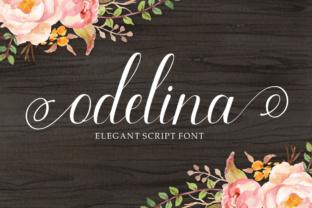
Odelina: A Handlettered Typeface for Thoughtful Design Work
When a project calls for lettering that feels personal, deliberate, and crafted by hand, the choice of typeface matters more than most designers initially realize. Odelina is a handlettered typeface that brings a calligraphy-inspired aesthetic to digital design. It carries the irregular charm and organic rhythm of real brush or pen work, but it is delivered as a fully functional font file. With 309 unique handmade characters, Odelina is not a digitized approximation of handwriting. It is a carefully constructed set of letterforms that retain the nuance of manual creation while offering the predictability and convenience of a digital typeface.
This article evaluates Odelina from a practical standpoint. It examines what the typeface offers, where it performs well, and who is most likely to find it useful. The focus is on real-world applications, technical considerations, and the kind of projects that benefit from a handlettered, calligraphic look.
What Makes Odelina Worth Discussing
The market for decorative and script typefaces is crowded. Many fonts claim to be handcrafted or calligraphic, but the quality of execution varies significantly. Odelina stands apart because it was built around a large set of handmade glyphs rather than a small set of repeated strokes. With 309 characters, the font covers a broad range of standard and extended typographic needs, including uppercase and lowercase letters, numerals, punctuation, ligatures, and alternates. The handlettered nature of each character means that no two forms are mechanical duplicates, which gives the font a natural, flowing appearance.
For designers who work on wedding invitations, greeting cards, social media graphics, or branding projects that require a personal touch, Odelina offers a balance between authenticity and usability. It behaves like a conventional font, so it can be installed and used in standard design software. But the end result reads as something far less sterile than a typical digital typeface.
Calligraphy-Inspired Letterforms
Odelina draws directly from calligraphic tradition. The strokes vary in thickness, with the kind of pressure-sensitive variation that comes from a brush or dip pen. Ascenders and descenders are pronounced, and the overall rhythm of the typeface leans toward elegance rather than casual informality. That distinction matters. Odelina is not a playful or overly whimsical font. It carries a certain refinement that makes it suitable for formal and semi-formal projects.
Handmade Authenticity at Scale
Because all 309 characters were created by hand, the font avoids the repetitive feel that plagues some script typefaces. When a single letter appears multiple times in a block of text, slight variations in weight, angle, and spacing become noticeable. That is precisely what gives Odelina its organic character. In longer passages, the text reads as fluid and human rather than mechanical. This is especially valuable for designs that aim to convey warmth, sincerity, or artistry.
Character Set and Practical Coverage
Odelina includes more than just the basic alphabet. The 309 characters cover accented letters for multilingual use, standard punctuation, numerals, and a selection of typographic extras. For designers working on invitations, signage, or packaging, this level of coverage reduces the need to supplement the font with additional typefaces for numbers or special characters. The typeface can stand alone in many contexts, which simplifies the design process and ensures visual consistency.
Wedding and Event Invitations
This is the category where Odelina performs most naturally. Wedding invitations, save-the-date cards, ceremony programs, and reception signage all benefit from a typeface that feels personal yet polished. Odelina works well in headline applications where the text is large enough to show the nuance of the handlettered strokes. It also holds up at smaller sizes for secondary text, though legibility in very small body copy can become an issue with any script typeface, and Odelina is no exception. For names, dates, and short phrases, it is highly effective.
Branding and Logo Design
Small business owners, freelancers, and creative entrepreneurs often seek a visual identity that feels approachable and distinctive. Odelina can serve as a logotype font for brands in the wedding, beauty, lifestyle, and hospitality sectors. Its calligraphic quality lends itself well to wordmarks, monograms, and taglines. However, it is worth noting that script fonts tend to be more readable in short form. For lengthy brand copy or body text in a website or brochure, Odelina is better reserved for headings and accents rather than paragraphs.
Cards, Signs, and Printed Stationery
Greeting cards, thank-you notes, product labels, and small signage are all natural applications for Odelina. The handmade quality of the typeface adds a tactile feel to printed materials, even when the design is fully digital. For paper goods, it can reduce the need for hand-lettering services, saving time and cost while still delivering a bespoke look. Signs and displays with short messages, such as menu boards, directional signs, or storefront window text, also benefit from the clear, recognizable letterforms.
Technical Quality
From a technical standpoint, Odelina is a well-constructed font. The kerning is handled thoughtfully, which is a common pain point in script typefaces. Poorly kerned scripts require manual adjustments in design software, but Odelina reduces that overhead. The spacing between letters feels intentional, and common letter pairings flow naturally. The font includes OpenType features such as ligatures and stylistic alternates, which give experienced users additional control over how the text appears.
Usability Across Software and Platforms
Odelina installs like any standard font and works in mainstream design applications such as Adobe Illustrator, Photoshop, InDesign, Canva, Procreate, and Affinity products. It also functions in word processors like Microsoft Word and Google Docs, though the advanced OpenType features are best accessed through professional design software. For marketers and content creators who work primarily in browser-based tools, compatibility with Canva and similar platforms is a practical advantage. The font is available in common formats such as OTF and TTF, and it is compatible with both macOS and Windows systems.
Consistency Across Weights and Styles
Odelina is distributed as a single weight, which is typical for handlettered typefaces. Designers accustomed to extensive font families with multiple weights and italics will need to plan accordingly. The single weight approach is not a flaw, but it does mean that the font works best in situations where contrast is achieved through size, color, or pairing with a complementary sans-serif or serif typeface. For example, pairing Odelina with a clean, neutral font for supporting text is a practical strategy that many designers adopt.
Who Benefits Most from Odelina
Odelina is not a universal solution for every design problem, but for specific audiences and project types, it offers clear value.
- Wedding and event planners who produce invitations, programs, and signage will find the typeface aligns well with romantic and elegant themes.
- Small business owners in the beauty, fashion, lifestyle, or hospitality sectors can use Odelina to establish a brand identity that feels handcrafted and personal.
- Freelance designers and creative entrepreneurs serving clients in the wedding or stationery space can add Odelina to their toolkit as a reliable script option that requires minimal manual adjustment.
- Marketers and content creators producing social media graphics, quote cards, or branded visuals will appreciate how Odelina adds character without requiring custom hand-lettering.
- Publishers and bloggers who need a distinctive display font for headers, pull quotes, or section titles can use Odelina to give their layout a refined, editorial feel.
When Odelina Excels
Odelina works best in applications where the text is short, the context is formal or romantic, and the design aims to convey craftsmanship. It is an excellent choice for headline-level text in wedding stationery, branding for boutique businesses, and any printed material where the tactile quality of the lettering can be appreciated. The font also performs well in digital contexts where high-resolution displays allow the stroke detail to be seen clearly.
When to Consider Alternatives
Like most script and calligraphic typefaces, Odelina has limitations. It is not designed for long-form body text. In paragraphs of more than a few lines, legibility decreases, and the decorative quality of the letterforms can become distracting. For dense text, a standard serif or sans-serif typeface is more appropriate. Additionally, the single weight means that designers looking for bold or light variants will need to pair Odelina with another typeface to create hierarchy. The handlettered aesthetic may also feel out of place in minimalist, industrial, or corporate design contexts where clean geometric forms are preferred.
Long-Term Value and Versatility
Odelina is the kind of typeface that retains its usefulness over time. Because it is not tied to a passing trend, it can be used repeatedly across different projects without feeling dated. The handmade quality gives it an enduring appeal that aligns well with the growing preference for authentic, human-centered design. For professionals who build a library of reliable typefaces, Odelina fills a specific niche that few fonts cover as effectively. The investment in a single well-crafted script font often pays for itself after a handful of client projects, particularly for designers working in the wedding and stationery space.
Final Considerations
Odelina delivers on the promise of a handlettered, calligraphic typeface that functions reliably in digital environments. Its 309 handmade characters provide the variety and organic feel that designers look for when they want something more personal than a mass-produced script. The font is practical enough for everyday use in branding and marketing, yet refined enough for high-end invitation work and formal design projects. It is not a catch-all solution, but for the right audience and the right brief, Odelina is a tool that produces consistently appealing results. Designers evaluating it should consider their typical project types, the importance of authentic lettering in their workflow, and whether the single weight meets their needs. For many, Odelina will be a welcome addition to a well-rounded typeface collection.