The Olivetti Valentine: A Typewriter That Refuses to Be Forgotten
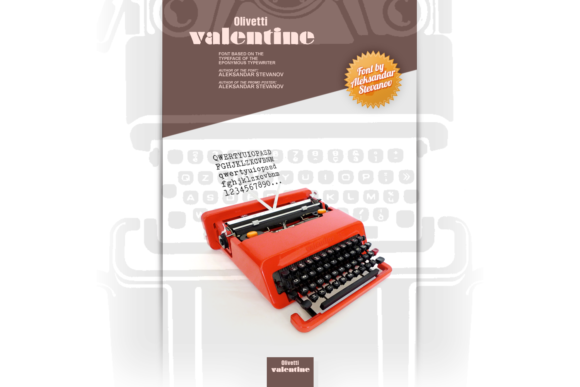
There are objects that simply work, and then there are objects that make you want to work. The Olivetti Valentine falls squarely into the second camp. Designed in 1969 by Ettore Sottsass and Perry King, this portable typewriter arrived at a time when the world was shifting—culturally, creatively, and technologically. It wasn't just a machine for typing. It was a statement. A bright red cylinder that looked more like a piece of pop art than office equipment, the Valentine challenged the dull beige of the typical workday. Decades later, its influence still shows up in graphic design, writing workflows, and even the fonts we choose. Whether you are looking at the actual typewriter or the retro typewriter font inspired by it, the Valentine offers something surprisingly practical for modern use.
Where the Valentine Fits in a Digital World
It might seem odd to talk about a mechanical typewriter in an age of AI assistants and voice-to-text. But the Olivetti Valentine has found a second life that has nothing to do with nostalgia for its own sake. People in their twenties and thirties, many of whom never used a typewriter growing up, are seeking it out. Why? Because it offers something that screens rarely do: a physical boundary between thinking and publishing.
When you sit down with a Valentine, or even with a font that mimics its character, you enter a different mode. There is no backspace button that erases without a trace. There is no infinite scroll of edits. For writers, this is oddly liberating. You move forward because you have no other choice. That constraint can unlock a kind of flow that perfectly polished word processors cannot replicate. A novelist working on a first draft might use an actual Valentine to get words onto paper without the temptation to revise every sentence into oblivion. A blogger or journalist might use the Valentine-inspired font in their digital workspace to visually cue themselves that this is a rough draft, not a final product.
For Designers and Visual Storytellers
Graphic designers have long borrowed from the visual language of the Valentine. The typeface associated with it is not exactly monospaced, not exactly serif, and not exactly sans—it lives in a category of its own. It carries the irregularity of a machine that stamped letters onto paper with real force. When used in poster design, book covers, or branding for coffee shops and independent publications, that font communicates something specific: handmade, thoughtful, and slightly rebellious.
Imagine a small craft brewery launching a limited edition ale. They want the label to feel artisanal but not precious. They choose a Valentine-inspired typeface for the product name and tasting notes. The uneven spacing and slight ink bleed effect make the can look like it was labeled by hand in a small studio. That visual cue speaks louder than any marketing copy about authenticity. The same font works well for wedding invitations, menu boards, or social media graphics where you want to evoke warmth and a personal touch without feeling like a template. Designers also pair it with bold colors and minimalist layouts to create contrast—the imperfect letterforms stand out against clean backgrounds, drawing the eye exactly where they want it.
Writers Fighting Screen Fatigue
People who write for a living spend hours staring at glowing rectangles. After a while, the words start to feel weightless. They float on the screen, and it becomes harder to judge whether a sentence is good or just temporarily plausible. Some writers have found that typing on an actual Olivetti Valentine—or any similarly mechanical machine—restores a sense of consequence to their work. Each key press requires effort. The carriage return demands a physical motion. The paper advances with a satisfying click. That feedback loop reminds the brain that writing is an act, not just a thought.
For those who cannot justify buying the vintage hardware, the font offers a partial solution. When you set your word processor to a Valentine-style typeface and switch your monitor to a dim, paper-like background, you trick your brain into treating this session differently. It becomes a tactile experience, even if you are still typing on a laptop. Some writers report higher output and lower self-editing when they use this setup for their first drafts. The font does not do the work for you, but it changes the atmosphere of the process.
Content Creators and Social Media Aesthetics
Platforms like Instagram, Pinterest, and TikTok thrive on visual identity. Creators who post about writing, journaling, or productivity often build their brand around a certain look. The Olivetti Valentine appears in these spaces regularly—both the physical machine and the font. A booktuber might film a video where they type their reading list on an actual Valentine, then overlay that footage with the font in their editing software. The result is cohesive and instantly recognizable. The audience does not just hear about the books; they see the act of writing as part of the experience.
Small businesses that sell custom stationery, planners, or printable journals also use the Valentine font to tie their products to a slower, more intentional lifestyle. A printable gratitude journal, for instance, might use the font for section headers and prompts. The customer downloads it, prints it at home, and immediately feels like they are engaging with something more substantial than another digital file. The font helps sell the feeling, not just the product.
Practical Considerations Before Going Retro
If you are drawn to the actual Olivetti Valentine typewriter, there are a few things worth understanding before you start searching online listings. First, these machines were built decades ago, and they require maintenance. The rubber rollers dry out over time. The key linkages can stick. Ribbon is still available, but it is not as common as it once was. If you buy one from a vintage shop or online marketplace, expect to either learn basic repair skills yourself or find a technician who specializes in vintage typewriters. That said, parts are generally available, and these machines were built to be repaired, not thrown away. Many owners find that the upkeep becomes part of the appeal—it connects you to the object in a way that clicking "buy now" never could.
Second, consider how you actually plan to use it. If you want to write the first draft of a novel, the Valentine works beautifully. If you want to type a ten-page business proposal with strict formatting requirements, it will frustrate you. There is no way to insert a table or change the font size mid-page. You are limited to whatever ribbon width and paper size you have loaded. That limitation is not a flaw if you accept it, but it is a dealbreaker for certain tasks. Know your workflow before you invest.
For those who mainly want the font, the considerations are different. Not every Valentine-inspired typeface is created equal. Some are carefully digitized versions that preserve the original's quirks—the slightly raised capital letters, the uneven baseline, the subtle ink spread. Others are rough approximations that look more like a generic typewriter font. Read reviews, look at sample text, and test the typeface in your actual design software before purchasing. A good Valentine font feels alive on the page. A bad one feels like a costume.
Strengths Worth Celebrating
The biggest strength of the Olivetti Valentine, whether as a machine or a font, is its ability to make writing feel significant. In a world where everyone types constantly, the Valentine stands apart. It demands that you pay attention. The physical version slows you down just enough to think before you press each key. The digital version carries a visual memory of that slowness. Both remind you that writing is not just about moving information from your brain to a screen—it is about shaping something that will be read by someone else. That shift in perspective can improve the quality of what you produce, regardless of your medium.
Another strength is its portability. The original Valentine was designed to be carried. It has a handle, a bright red case, and a compact shape. You could take it to a café, a park, or a friend's house. That portability made it a tool for living, not just working. The font version carries that same spirit. You can use it on a phone, a tablet, or a laptop. It does not require any special software or hardware. It is a small way to bring a little bit of that 1969 energy into whatever you are doing today.
Limitations to Keep in Mind
On the flip side, the physical Valentine is loud. The keys clack. The bell rings at the end of each line. If you share a workspace or live with other people, the noise might become an issue. Some people love it. Others find it distracting. Try to experience the sound in person before committing. Similarly, the font, while charming, is not suitable for long body text in a book or a lengthy article. It works best for headlines, short passages, or decorative elements. Reading an entire novel set in a typewriter font is exhausting for the eyes. Use it where it matters most, and let cleaner typefaces handle the heavy lifting.
The Valentine also imposes a physical limit on your output. A typewriter ribbon lasts for a few dozen pages at most. If you write every day, you will go through ribbons faster than you expect. Paper costs add up. Corrections are messy. These are not reasons to avoid the Valentine, but they are reasons to plan ahead. If you are the kind of person who enjoys working within boundaries, you will thrive. If you prefer frictionless efficiency, stick with the font and enjoy the aesthetics without the logistics.
Different Users, Different Relationships
A graphic designer might never touch a real Valentine but will use the font in every third project. A novelist might own three Valentines and use them all for different stages of the writing process. A content creator might film unboxing videos of ribbon spools and let the font do the rest. A small business owner might print their menus in a Valentine-style typeface to give their brand a retro but not dated feel. The same object serves completely different purposes depending on who picks it up. That versatility is rare. Most tools are built for one job. The Valentine was built for writing, but it ended up being about style, pace, and intention. That is why it has lasted.
If you are considering adding the Olivetti Valentine to your life—as a machine, a font, or just a reference point in your creative work—start with how you want to feel when you write. Do you want a sense of ceremony? Do you want to disconnect from the digital noise? Do you want your designs to carry a hint of history? The Valentine delivers on all of those fronts, but only if you let it work on its own terms. Give it the space to be imperfect. That is where its real value lives. The slightly crooked letters, the faded ink, the resistance of the keys—these are not flaws. They are evidence that a person was there, pressing down, making something real.