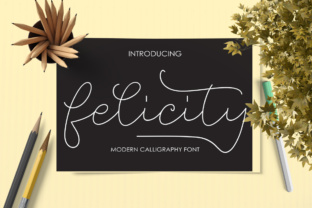
Felicity Script Font: Elegance Meets Practicality
Some fonts feel like they belong on a wedding invitation and nowhere else. Others are so technical they could never carry warmth. Felicity and Felicity Script sit in a rare middle ground—a calligraphic design that feels casual rather than formal, expressive without being illegible. With two weights, Regular and Bold, and a generous set of swashes, this typeface offers flexibility for anyone who wants writing that looks human but works reliably across digital and print projects.
Whether you are designing a logo for a friend's small business, formatting a classroom handout, or building a brand from scratch, Felicity rewards attention. But it also forgives inexperience. That balance of polish and ease is why different kinds of people find value in it for very different reasons.
What Makes Felicity Different
Calligraphic fonts often lean either toward ornate historical scripts or toward rough, hand-drawn lettering. Felicity splits the difference. Its letterforms follow the logic of a pen or brush, but the strokes stay clean and readable. The swashes are decorative without overwhelming the base letters. In Regular weight, the font reads as friendly and approachable. In Bold, it gains presence while keeping the same casual character.
For someone new to working with fonts, that consistency matters. You do not need to guess which weight works for a headline or whether the swashes will break the rhythm of a sentence. The design already makes those decisions for you. For experienced designers, the restraint is just as valuable. A font that already feels balanced leaves room to experiment with layout, color, and spacing without fighting the typeface itself.
Why Different Audiences Care About Felicity
The same font looks different depending on who is using it and why. A freelancer pricing a branding project sees Felicity as a tool for speed and reliability. A hobbyist scrapbooking a family album sees it as a way to add beauty without learning calligraphy. Both are correct.
Beginners and Hobbyists
If you are new to typography or design, Felicity offers a forgiving entry point. The swashes are built into the font, so you do not need to manually position flourishes or worry about kerning. You can type a phrase in Regular weight for a greeting card, add a few swashes, and get a result that looks intentional rather than messy.
For a hobbyist making party invitations or a blogger formatting a pull quote, the Bold weight works well for short emphasis without clashing with the lighter text. Because the font is casual, small inconsistencies in your layout will not stand out. That lowers the pressure to make everything perfect.
Creators and Small Business Owners
When you run a business, your font choices carry weight. Felicity works for logos, product labels, social media graphics, and packaging because it can shift between playful and professional depending on context. A bakery using Felicity for a cake box label keeps the warmth of handmade goods. A wedding planner using it for a website header signals elegance without stiffness.
The two weights give you a built-in hierarchy. Use Regular for body text in a brochure and Bold for the business name. The swashes add signature flourishes to a logo without requiring custom illustration. For entrepreneurs who need to produce polished materials quickly, that combination saves time and reduces the need to hire outside designers for every touchpoint.
Educators and Publishers
Teachers and curriculum designers often need fonts that are readable but not boring. Felicity works for worksheet titles, classroom posters, and presentation slides. The casual quality helps materials feel approachable for students, while the calligraphic style adds visual interest that keeps attention.
For self-publishers creating ebooks, print books, or magazines, Felicity can serve as an accent font for chapter headings or pull quotes. Its readability at larger sizes means you can use it sparingly for impact without confusing the reader. The Regular weight works well in short passages where you want a human touch, such as a dedication page or author note.
Marketing Professionals and Freelancers
If you produce content for clients, flexibility matters more than personal taste. Felicity adapts to industries that want a handmade feel—cafes, boutiques, event planners, artists—but can also tone down for more conservative projects by limiting swash usage and sticking to Regular weight.
For social media marketers, the Bold weight holds up well at small sizes on mobile screens. The swashes work as decorative dividers between sections of an Instagram carousel or as accent marks on a quote graphic. Because the font is distinctive without being loud, it can become part of a consistent brand voice without overwhelming other design elements.
Practical Priorities: Cost, Quality, and Long-Term Use
Different people evaluate fonts on different timelines. A consumer buying a font for a single wedding invitation cares about immediate beauty and ease of use. A designer licensing a font for client work cares about licensing terms, file formats, and how the font performs across platforms.
Felicity delivers on both fronts. The design quality means you can use it for a one-off project and be satisfied with the result. But the two-weight system and swash library also give it staying power for ongoing use. A small business owner might start with Felicity for a logo, then reuse it for email headers, signage, and product tags over years. The font does not feel trendy or dated, which protects that investment.
For professionals, the reliability of well-hinted letterforms and consistent spacing matters during production. Felicity behaves predictably in design software, which reduces troubleshooting time. That reliability is often invisible to non-designers, but it directly affects how fast a freelancer can deliver a project and whether the final file prints or displays correctly.
Does Felicity Match Your Goals?
Choosing a font is about fit, not just taste. Felicity suits projects where you want a handwritten feel but need the polish and repeatability of a digital typeface. If your work leans formal—legal documents, corporate reports, academic journals—a casual calligraphic font will feel out of place. But if your audience expects warmth, personality, or craftsmanship, Felicity delivers that without sacrificing clarity.
For beginners, the best test is to try it in a real project. Type a short phrase in Regular weight, add a swash to the first letter, and see how it feels. If the result looks closer to what you imagined than what you usually get from standard system fonts, Felicity is probably a strong match.
For experienced creators, the question is whether Felicity fills a gap in your current library. If you already own several calligraphic fonts, compare how Felicity handles bold text and swash integration. The Bold weight is genuinely useful rather than just a thicker version, and the swashes are designed to attach naturally rather than floating awkwardly. That combination is rarer than it should be.
For business owners, consider where the font will appear most often. If you need a consistent look across a website, packaging, and print materials, Felicity can anchor that identity. Test how it reads at small sizes on a product label and at large sizes on a store sign. If it holds up in both extremes, it will serve you well over the long term.
Using Felicity in Real Projects
A practical example helps clarify whether a font fits your workflow. Imagine a freelance graphic designer building a brand for a small coffee roaster. The client wants labels that feel artisanal but look professional. Felicity Regular works for the coffee names on each bag. Felicity Bold carries the roastery name on the front label. A single swash under the logo adds the handmade flourish that the client wants. The whole system stays consistent across bags, gift tags, and a website banner. The designer delivers faster because the font handles the decorative work.
Now imagine a teacher creating a classroom newsletter. Felicity Regular works for the headline. The Bold weight highlights the date and key announcements. Swashes frame the edges of a simple border. The newsletter feels polished but approachable for parents. The teacher spent minimal time on formatting because the font made the layout decisions straightforward.
Both examples use the same typeface for entirely different contexts. That versatility is the core strength of Felicity. It does not force you into a single style. Instead, it gives you enough options—two weights, swashes, a casual tone—to adapt the font to your specific audience and purpose.
A Font That Grows With You
As your skills or business evolve, your font needs may change. Felicity scales with that growth because it works across skill levels and project types. A beginner can use it with no design experience and get good results. A professional can push it further by combining it with other typefaces, adjusting swash placement, or layering it with textures.
The long-term usefulness of a font often comes down to whether you keep reaching for it after the novelty fades. Felicity earns that return because it solves real problems: how to make text feel human without sacrificing readability, how to add decoration without cluttering a layout, and how to maintain a consistent voice across different materials. For anyone who writes, designs, or communicates visually, those are problems worth solving well.