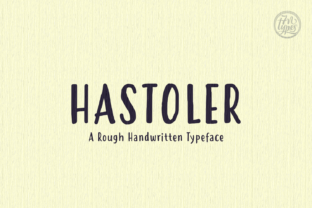
Hastoler: A Handwritten Font with Playful Character
When you search for a typeface that balances personality with readability, you often have to compromise. A font that feels lively may be hard to read at scale, while a legible one can feel sterile. Hastoler offers a refreshing middle ground. This rough handwritten font carries a playful, hand-painted energy while remaining remarkably clear thanks to its serif foundation. Whether you are designing a product label, building a lesson plan, or refreshing your blog’s visual identity, understanding what Hastoler brings to the table can help you decide if it fits your project.
What Makes Hastoler Stand Out
Hastoler is not a polished, uniform typeface. Its charm comes from deliberate imperfection. The strokes vary in thickness, and the lines are never perfectly straight. That inconsistency gives each letter a hand-drawn quality, as if someone painted it with a brush that moved at its own pace. Despite this roughness, the serif base keeps the silhouette of each character grounded. The result is a font that feels spontaneous but does not sacrifice clarity. You can use it for headlines, packaging, posters, or any context where you want the text to feel warm and approachable without confusing the reader.
For someone new to typography, this combination is valuable. You do not need to be a trained designer to see that Hastoler is easy to read. The serifs guide the eye naturally, while the uneven strokes add texture that draws attention. For experienced creators, the font offers something different—a tool that brings a handcrafted aesthetic without requiring hours of manual lettering.
Why Different Audiences Care About Hastoler
The value of Hastoler shifts depending on who you are and what you are trying to accomplish. A marketer launching a campaign and a teacher creating classroom materials may both find it useful, but for very different reasons. Let us explore how various people might approach this font.
Creative Professionals and Designers
If you work in graphic design, branding, or illustration, your priority is often flexibility. You need a font that adapts to different moods and mediums without losing its identity. Hastoler works well for designers who want a hand-painted look without the inconsistency of actual handwriting. You can use it for social media graphics, event posters, or editorial headlines where you want a human touch. Because the font is readable even at smaller sizes, you can also pair it with cleaner sans-serif fonts for body text. That combination lets you maintain a cohesive visual hierarchy while injecting personality into key elements.
For freelance designers, cost and licensing matter. Before committing to Hastoler for client work, check whether the license covers commercial use. If it does, the font becomes a practical addition to your toolkit—especially for projects that call for a rustic, artisanal, or playful feel. You can also experiment with letter spacing or color overlays to emphasize the uneven strokes, creating a layered effect that feels tactile.
Small Business Owners and Entrepreneurs
Running a small business means wearing many hats, including the marketing hat. You may not have a dedicated designer, but you still need your brand to look professional and inviting. Hastoler can help you achieve that without a steep learning curve. Use it for your logo, product labels, or website headlines. The hand-painted quality makes your brand feel honest and approachable—qualities that resonate with customers looking for authentic products or services.
For example, a bakery owner could use Hastoler on chalkboard-style menus, gift tags, or social media posts promoting seasonal treats. A handmade soap seller might use it for ingredient lists or packaging inserts. The font communicates care and craftsmanship. Just remember to keep it for short text blocks. Using Hastoler for long paragraphs will tire the eye, even though it is more readable than many handwritten fonts.
Educators and Content Creators
Teachers, tutors, and educational content creators often look for fonts that engage learners without distracting them. Hastoler strikes that balance well. Its playful feel can make worksheets, flashcards, or classroom posters feel less formal and more inviting. Students, especially younger ones, respond to visual warmth. A headline in Hastoler on a lesson slide or a handout can signal that the material is approachable.
For bloggers and YouTubers, the font serves a similar purpose. Use it for video thumbnails, quote graphics, or blog post titles. If your content focuses on creativity, parenting, DIY projects, or lifestyle topics, Hastoler reinforces a friendly, hands-on tone. It tells your audience that you value personality over polish. That authenticity often builds stronger connections than a generic sans-serif ever could.
Hobbyists and Personal Project Enthusiasts
Not everyone needs a font for commercial reasons. If you are a scrapbooker, a bullet journal enthusiast, or someone who likes making personalized gifts, Hastoler can elevate your projects. The font mimics the look of hand-lettering, which is a popular aesthetic in stationery and home decor. You can print quotes, label jars, or create custom cards without needing steady handwriting or a brush pen.
For hobbyists, ease of use is often the top priority. Hastoler is straightforward to install and works in most design software, including free tools like Canva or GIMP. You do not need advanced skills to get good results. Just type your text, adjust the size, and let the font do the expressive work. If you are making a gift for someone, the hand-painted feel adds a personal touch that standard fonts cannot match.
Practical Priorities When Choosing Hastoler
Deciding whether Hastoler is right for you depends on what you value most in a font. Here are the main factors different users tend to weigh.
Readability and Presentation
For any written communication, readability matters. Hastoler is legible for a handwritten font, but it has limits. Use it for headlines, short phrases, or display text. If you need to convey complex information or long sentences, pair it with a simpler font. This approach works for everyone, from designers to educators. The key is knowing when to let Hastoler lead and when to let it support.
Creativity and Emotional Tone
Hastoler excels at creating a specific mood: playful, handmade, and sincere. If that matches your brand or project voice, the font becomes a powerful tool. For a corporate annual report or a legal document, it would feel out of place. But for a children’s book cover, a craft fair flyer, or a personal blog header, it is ideal. Think about the emotional response you want from your audience. Hastoler invites warmth and curiosity, not authority or formality.
Cost and Commercial Value
Pricing varies depending on where you obtain the font. Some foundries offer it for a one-time fee, while others include it in subscription libraries. If you are a professional using it for client work, consider the return on investment. A distinctive font can become part of a brand’s identity, making it worth the expense. For hobbyists, free or low-cost alternatives may exist, but check the license terms carefully. Even free fonts may restrict commercial use.
Long-Term Usefulness
Trends in design come and go. Hastoler has a timeless quality because it mimics hand lettering, which never goes out of style. That said, its usefulness depends on how often you need a playful, handwritten look. If your work evolves toward a sleek, modern aesthetic, you may use it less over time. For creators who consistently produce warm, artisanal content, Hastoler can remain a staple in your font library for years.
How to Tell If Hastoler Matches Your Goals
Before you download or purchase Hastoler, ask yourself a few questions. What are you creating? Is it a one-time project or part of an ongoing brand? Does your audience respond to a handcrafted feel, or do they expect a more polished look? For example, a wedding invitation business serving rustic-themed couples would find Hastoler a natural fit. A tech startup targeting enterprise clients would likely need something cleaner.
If you are just starting out with design, Hastoler is forgiving. It looks good with minimal effort because the imperfections are part of its charm. You do not have to worry about kerning pairs or precise alignment as much as you would with a geometric sans-serif. That lower barrier to entry is valuable for beginners who want professional-looking results without professional-level skills.
For experienced users, the font offers subtlety. You can manipulate it—adjusting tracking, layering textures, or pairing it with rough backgrounds—to enhance the hand-painted effect. The serif base gives you stability, so even when you push the design in experimental directions, the text remains readable.
Ultimately, Hastoler is a font that rewards intention. It is not a one-size-fits-all solution, but for the right project, it adds a human touch that polished typefaces often lack. Whether you are designing a menu, decorating a classroom, or launching a brand, the playful inconsistency of Hastoler can help your words feel less like type and more like something someone actually wrote.