Made from Scratch: A Strategic Choice for Authentic Brand Communication
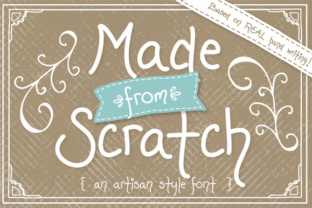
Typography is rarely the first thing people notice, yet it shapes how they feel about what they see. A font can suggest professionalism, playfulness, urgency, or warmth before a single word is read. Made from Scratch is a dancing, handwritten font that evokes the charm of chalkboard menus and brown paper bag scribbles. Its well-rounded letterforms feel smooth and approachable, giving every piece of text a handmade quality. For anyone who communicates through visual media—whether you run a small business, design invitations, create content, or teach—this font offers more than just decoration. It offers a way to signal authenticity and care.
This article explores what Made from Scratch is, why it can be strategically useful, and how to use it with intention. You will find practical examples, planning considerations, and guidance for integrating this font into your work without relying on hype or randomness.
What Made from Scratch Actually Is
Made from Scratch is not a generic script font. It is based on real handwriting, which means every character carries the slight irregularities and natural flow of a hand-drawn letter. The curves are rounded, giving the typeface a soft, smooth appearance rather than a sharp or stiff one. This makes it ideal for projects where you want to convey a personal, approachable tone.
The font is designed to work with any standard software. You do not need special encoding or advanced technical skills to use it. Installation follows the same process as most fonts, and an online manual is included to guide beginners through the steps. This accessibility means that anyone—from a seasoned designer to a first-time user—can put Made from Scratch to work quickly.
Because the font is based on handwriting, it carries a sense of individuality. No two letters feel perfectly identical, which gives your text a handcrafted look. This can be valuable in an era where audiences are increasingly skeptical of overly polished, corporate visuals. A font like Made from Scratch signals that a human being was involved in the creation process.
Why Authenticity Matters in Brand Communication
Audiences today are bombarded with content. They scroll past hundreds of messages daily, and most of them look similar. What breaks through is not always the loudest or most complex design. Often, it is the simplest and most genuine. A font that looks like handwriting can create a sense of connection because it feels personal. When a customer sees a menu written in a chalkboard style, they do not just read the words—they feel the atmosphere of a local café. When an invitation script looks like it was written by hand, the recipient feels valued.
Using Made from Scratch strategically means leveraging this emotional response. It is not about making everything look casual or messy. It is about choosing a visual voice that matches your message. If you are promoting a workshop, a handmade product, a community event, or a personal brand, this font can reinforce the idea that your work is crafted with care.
From a planning perspective, this means thinking about your audience’s expectations. A law firm would probably not use a playful handwritten font for a contract. But a bakery, a children’s book author, a wedding planner, or a yoga instructor could use it to align their visual identity with their values. The strategic question is not whether the font is attractive. It is whether the font supports the relationship you want to build with your audience.
Strategic Use Cases for Made from Scratch
Understanding where this font adds value helps you avoid using it in contexts where it might work against your goals. Below are several scenarios where Made from Scratch can support your communication and branding objectives.
Invitations and Event Materials
Whether you are planning a birthday party, a wedding, a gallery opening, or a community gathering, invitations set the tone. A handwritten font suggests that the event is personal and that guests are being welcomed by a real person, not a machine. Made from Scratch works especially well for casual or semi-formal events where warmth is more important than strict formality. You can pair it with a clean serif or sans-serif body text to maintain readability while adding personality to headings and key details.
Handmade Signs and Menus
Cafés, bakeries, and retail shops often use chalkboard signs to communicate daily specials or promotions. A font that mimics real chalk lettering fits naturally in this environment. Made from Scratch gives you the look of hand-drawn text without requiring someone to physically write it. This means you can produce consistent signage across multiple locations or update your menu quickly while retaining the handmade aesthetic. For small business owners, this reduces the time spent on manual sign writing and allows for faster iteration.
Custom Apparel and Merchandise
T-shirts, tote bags, mugs, and other merchandise often rely on typography to carry the message. A playful, rounded handwritten font can make a product feel more approachable and shareable. If you are launching a limited-edition item or a slogan-based product, Made from Scratch can add a sense of spontaneity. It does not look like a corporate logo. It looks like something a friend might have doodled. That quality can increase the perceived authenticity of your merchandise.
Digital Content for Social Media and Blogs
Social media posts, quote cards, and blog headers are another natural fit. Many creators and marketers use platforms like Instagram or Pinterest to share visually driven content. A font that looks hand-drawn can help your graphics stand out in a feed full of stock photography and template designs. It also signals that your content is original and not mass-produced. When used consistently across your digital presence, Made from Scratch can become part of your visual identity, helping your audience recognize your posts instantly.
Educational and Workshop Materials
Teachers, trainers, and workshop facilitators often create handouts, worksheets, or presentation slides. A handwritten font can make educational materials feel less intimidating and more inviting. It suggests that the content was prepared with care for the learner, not copied from a textbook. This subtle shift in tone can improve engagement, especially in creative or community-based learning environments.
How to Approach Made from Scratch with Intention
Using a font like Made from Scratch because it looks nice is not enough. To get real value, you need to consider your goals first. Ask yourself what feeling you want your audience to experience. Do you want them to feel welcomed, inspired, informed, or entertained? The font should serve that feeling, not compete with it.
Next, think about readability. Handwritten fonts can sometimes be harder to read, especially in long paragraphs or small sizes. Made from Scratch has relatively clear letterforms due to its rounded structure, but it is still best used for short blocks of text, headings, or emphasized words. Reserve simpler, more neutral fonts for body copy when you need to communicate large amounts of information. This combination gives you the best of both worlds: personality where it counts and clarity where it matters.
Consider color and background as well. The font was inspired by chalkboard menus and brown paper bags, so it pairs naturally with darker backgrounds and lighter text, or with warm, earthy tones. Testing contrast ensures your text remains legible and visually appealing. A quick test on different devices or printed samples can save you from making assumptions that do not hold up in practice.
Risks of Using Made from Scratch Without a Strategy
No tool is universally right for every situation, and fonts are no exception. Using Made from Scratch without clear goals can lead to several problems. First, it may undermine your credibility if the context calls for a more professional or formal tone. A financial planner sending a client update in a playful handwritten font might seem careless rather than approachable. Second, overusing the font across too many touchpoints can dilute its impact. If every piece of communication looks handwritten, the effect becomes predictable and loses its power to convey authenticity.
Another risk is technical. While Made from Scratch works with standard software, some platforms or devices may render handwritten fonts inconsistently. Always test your designs on the actual medium where they will appear. A sign printed at large scale may look different from a digital version. Similarly, an email client may substitute the font with a fallback if the recipient does not have it installed. Anticipate these issues by using font embedding or by providing alternative versions where necessary.
Finally, there is the risk of looking trendy rather than timeless. Handwritten fonts come and go in popularity. If you build a brand identity entirely around a specific style, you may need to update it sooner than you expect. A more durable approach is to use Made from Scratch as an accent or secondary element, not as the sole representation of your brand. This way, you can refresh your look without rebuilding everything from the ground up.
Long-Term Value and Integration
When used thoughtfully, Made from Scratch can contribute to long-term goals like brand recognition, customer loyalty, and creative efficiency. Because the font is based on real handwriting, it carries a human quality that is difficult to replicate with more mechanical typefaces. Over time, audiences come to associate that human quality with your brand or your work. They remember how your message made them feel, and the font is part of that memory.
Integration into your workflow is straightforward. The font does not require special software or technical expertise. The included online manual walks through installation and usage, making it accessible even for beginners. This means you can start experimenting immediately without a steep learning curve. As you become more comfortable, you can explore pairing it with other fonts, adjusting letter spacing, or combining it with illustrations for a custom look.
From a productivity standpoint, having a font that works across multiple projects saves time. Instead of searching for a new typeface for every campaign or event, you can rely on Made from Scratch as a consistent element. This consistency also strengthens your visual identity because your audience sees the same style recurring across different materials. Over time, that repetition builds familiarity and trust.
Practical Tips for Getting Started
If you are considering adding Made from Scratch to your toolkit, begin with a small test project. Choose one item—a single sign, a social media graphic, or an invitation—and design it with the font. Live with it for a few days. Ask a colleague or friend for their honest impression. Does the font support the message you are trying to send? Does it feel natural or forced? This low-risk experiment gives you concrete feedback before you commit to a larger rollout.
When you are ready to use it more broadly, create a simple style guide that defines where and how to apply the font. Specify which elements use Made from Scratch (headings, quotes, short text) and which use a secondary font (body copy, long paragraphs, data). This guideline prevents inconsistent application and helps anyone on your team maintain the same visual standards.
Finally, keep the font in context. A handwritten typeface is not a shortcut to authenticity. It is a tool that amplifies authenticity when the rest of your content also feels genuine. Pair it with real photographs, honest copywriting, and a clear sense of purpose. When all these elements align, the font does not feel like a decoration. It feels like an extension of your voice.
Making the Decision That Fits Your Goals
Choosing a font is a small decision with surprisingly large consequences. It affects how people perceive your message before they even read it. Made from Scratch offers a playful, smooth, and personal style that can support a wide range of creative and professional projects. But like any tool, its value depends on how you use it.
By approaching this font with intentionality, you avoid the trap of random decoration. You instead make a deliberate choice that supports your goals, whether that means strengthening your brand, connecting with your audience, or simply making your work feel more human. Start with a clear purpose, test your assumptions, and let the font serve your message rather than the other way around.
Made from Scratch is available now with an included installation manual and works with any standard software. It is ready to use the moment you decide to try it. The only remaining step is deciding how it fits into your larger plan.