Getting the Most from Anggita and Anggita: A Practical Guide to Using a Handwritten Script Font
Handwritten script fonts have a peculiar power. They can make a design feel personal, warm, and human in an instant. But they can also undermine your message if chosen or applied carelessly. Anggita and Anggita is a handwritten script typeface that has caught the attention of designers, small business owners, and content creators looking for that handcrafted touch. Before you download, purchase, or commit to using it in your next project, there are several practical considerations worth understanding. Getting these details right can save you time, money, and the frustration of a design that misses the mark.
What Anggita and Anggita Actually Offers
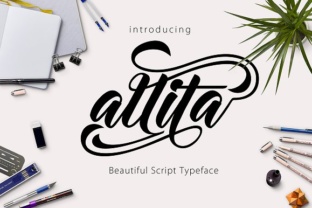
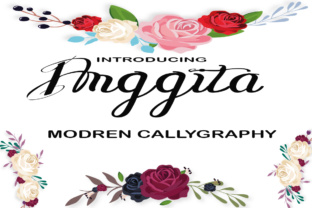
Anggita and Anggita is a handwritten script font that emulates the natural flow of handwriting with its connecting strokes, varied letterforms, and organic feel. Like many script fonts in this category, it is designed to bring a sense of authenticity and approachability to branding, invitations, social media graphics, product packaging, and other visual communication. Its appeal lies in its ability to feel less mechanical than standard typefaces and more like something penned by hand. For creators and business owners who want to stand out in a crowded visual landscape, that human quality can be a significant advantage.
However, handwritten fonts are not one-size-fits-all solutions. The very qualities that make Anggita appealing—its flourishes, its irregularity, its personality—are also the qualities that can cause problems when used without careful consideration. Understanding these potential pitfalls is the first step toward using the font effectively.
Mistake Number One: Ignoring Readability in Favor of Style
The most common error people make with handwritten script fonts is prioritizing aesthetic appeal over legibility. Anggita and Anggita may look beautiful in a headline or on a product label, but when used for body text or longer passages, readability can suffer. Script fonts, by their nature, have connecting strokes and letterforms that can blur together at smaller sizes. Readers may find themselves squinting or re-reading lines, which is the opposite of what you want your communication to achieve.
How to avoid this: Reserve Anggita for short bursts of text—headlines, subheadings, callouts, pull quotes, or single words. Pair it with a clean, neutral sans-serif or serif font for the body copy. This gives you the warmth and personality of the script without sacrificing clarity. For example, using Anggita for your brand tagline and a simple sans-serif for the paragraph below it creates contrast that actually enhances the design. Test your layout at the actual size it will be viewed. If you have to strain to read it, your audience will too.
Mistake Number Two: Overlooking Spacing and Kerning
Many handwritten script fonts come with default spacing that works fine for short strings but becomes problematic in longer words or phrases. Anggita and Anggita is no exception. The letter connections in script fonts are sensitive to the letters that precede and follow them. If the spacing is too tight, letters can clash or appear cramped. If it is too loose, the handwritten illusion breaks and the text looks disjointed.
How to avoid this: Always adjust tracking and kerning manually when using Anggita in a design tool like Canva, Adobe Illustrator, or Affinity Designer. Do not rely on the default settings. Zoom in and look at each letter pair. Pay special attention to combinations like ff, ll, oo, and any instance where a descender from one letter might collide with the ascender of the next. This kind of refinement separates amateur work from professional design. If kerning adjustments feel tedious, use Anggita primarily for shorter phrases where spacing is easier to control.
Mistake Number Three: Assuming One Script Font Fits Every Context
Anggita and Anggita has a specific personality. It is warm, casual, and slightly romantic. That makes it excellent for wedding invitations, artisanal product branding, lifestyle blogs, and personal stationery. But it may not be appropriate for corporate reports, legal documents, medical communications, or any context where formality and authority are required. Using a handwritten script in the wrong setting can make your message feel unserious or out of touch.
How to avoid this: Match the font to the mood and purpose of your project. Before committing to Anggita, ask yourself: Does this project need to feel personal and approachable? Or does it need to convey professionalism and trust? If the answer is the former, Anggita could be a strong choice. If the answer is the latter, consider using it only sparingly—perhaps in a logo or as an accent element—while leaning on a more neutral typeface for the bulk of the text. Context awareness is a skill that experienced designers develop over time, and it is one of the most valuable tools you can bring to any project.
Mistake Number Four: Neglecting Licensing and Usage Terms
This mistake is less about design and more about legal and ethical considerations, but it is one of the most costly oversights. Handwritten script fonts, including Anggita and Anggita, often come with specific licensing terms. Some licenses cover only personal use, while others extend to commercial projects. Using a font in a way that exceeds your license—whether for a product label, a website, or a marketing campaign—can lead to legal disputes, removal of your work, or unexpected fees.
How to avoid this: Read the license agreement before you download or purchase. If you are a small business owner or freelancer, look for a commercial license that covers your specific use case. Some font foundries offer tiered pricing based on the number of users, the reach of your project, or the type of media. If you are using a free version, verify whether commercial use is allowed. When in doubt, reach out to the foundry directly. This is not an area where guessing is acceptable. A small upfront investment in the correct license can prevent significant headaches later.
Also, keep a record of your licenses. If you share design files with a client or a printer, they may need to verify that the font is properly licensed. Being organized about this protects everyone involved.
Mistake Number Five: Ignoring How the Font Behaves in Different Formats
A font that looks perfect on your screen may behave very differently when printed, displayed on a website, or rendered in a video. Anggita and Anggita, like many handwritten scripts, has delicate strokes and subtle variations that can be lost or distorted depending on the medium. Thin strokes may disappear when printed on uncoated paper. Small sizes may become illegible on a mobile screen. The font might not render correctly in certain software or on older operating systems.
How to avoid this: Test Anggita in the actual medium where it will be used. If you are printing, request a physical proof or print a test page on your own printer using the same paper stock. If you are using it on a website, check how it appears on different devices and browsers. Consider using a web font version if one is available, as it will be optimized for screen rendering. If you are using it in a video, render a short test clip at the intended resolution. Testing early in the process gives you time to make adjustments or choose an alternative if the font does not perform as expected.
Mistake Number Six: Using the Font Without Considering Your Audience
This is a subtle but important misstep. Different audiences have different expectations when it comes to typography. A handwritten script font like Anggita may resonate beautifully with a creative, youthful, or design-savvy audience, but it may feel out of place or even off-putting to a more traditional or older demographic. The same font that signals warmth and authenticity to one group may signal amateurism or trend-chasing to another.
How to avoid this: Know your audience before you choose your typeface. If you are designing for a luxury brand, a conservative industry, or a professional service, use handwritten scripts sparingly and deliberately. If you are designing for a creative personal brand, a lifestyle influencer, or an artisan product, Anggita can be a natural fit. When in doubt, conduct a quick informal poll. Show your design to a few people who represent your target audience and ask for their honest reaction. Their feedback will tell you more than any font preview ever could.
What to Check Before You Commit to Anggita and Anggita
Before you finalize your decision, run through this short checklist. It will help you avoid the most common mistakes and ensure that the font serves your project well.
- Character set: Does the font include the characters you need—accents, special punctuation, numerals? Many script fonts have limited character sets.
- Alternate glyphs and ligatures: Some versions of Anggita may include alternate letterforms or stylistic sets that give you more control over the appearance. Check if these are available and how to access them in your design software.
- File format: Is the font available in the format your software requires—OTF, TTF, WOFF? This matters for both print and web use.
- License clarity: As mentioned, confirm that the license matches your intended use, including commercial applications if relevant.
- Pairing potential: Test Anggita alongside the fonts you plan to use for body text, captions, and other elements. A strong pairing can elevate the entire design.
- Reproducibility: If you plan to have the design printed or manufactured, check with your vendor early. Some printers have specific requirements for font embedding or outline conversion.
Making Anggita Work for You
The difference between a design that feels polished and one that feels amateurish often comes down to a handful of thoughtful decisions. Anggita and Anggita is a font with genuine charm and utility, but like any tool, its effectiveness depends on how it is used. By avoiding the common mistakes discussed here—prioritizing readability, adjusting spacing, respecting context, securing proper licensing, testing in your medium, and considering your audience—you put yourself in a position to use the font with confidence.
If you are a small business owner working on your own branding, a blogger designing your site, or a freelancer delivering a project for a client, these principles apply equally. Typography is a silent communicator. It shapes how people perceive your message before they read a single word. Taking the time to choose and use a handwritten script font like Anggita with intention is not an indulgence. It is a practical investment in the quality and impact of your work.
Start with a clear sense of what you want to communicate. Pair Anggita with simpler, more neutral typefaces. Test it in the real conditions where it will be seen. Adjust spacing until it feels right. And above all, remember that the goal is not to show off a font—it is to communicate something meaningful to the people you are trying to reach. When you keep that focus, Anggita and Anggita can become a valuable part of your design toolkit rather than a regrettable experiment.