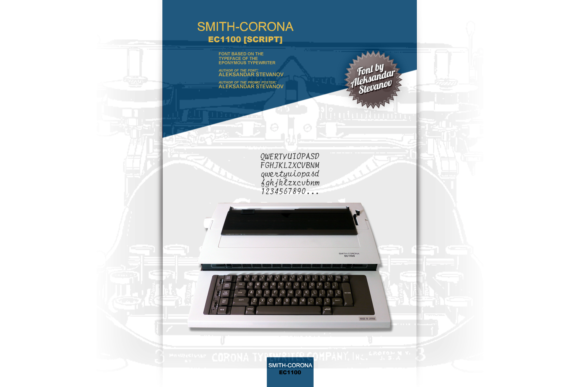
Smith-Corona EC1100 Script and Canon TypeStar 210: A Practical Look at Retro Handwritten Typefaces
In a design landscape dominated by clean sans-serifs and polished display faces, there is a growing demand for type that feels personal, tactile, and slightly imperfect. Two typefaces that have steadily gained attention among creatives and professionals alike are Smith-Corona EC1100 Script and Canon TypeStar 210. Both draw inspiration from a specific era—the late 20th century consumer typewriter—yet each brings a distinct voice to the page. This article offers a grounded, experience-based evaluation of what these fonts offer, where they shine, and who will find them most useful.
What Are Smith-Corona EC1100 Script and Canon TypeStar 210?
Smith-Corona EC1100 Script is a script typeface rooted in the mechanical output of the Smith-Corona electric typewriter line, specifically the EC1100 model. It replicates the fluid but slightly irregular stroke patterns typical of fabric ribbon typing on platen paper. The result is a script that feels handwritten yet retains the rhythm of a machine—consistent spacing with subtle weight variation.
Canon TypeStar 210, by contrast, originates from the Canon TypeStar 210 thermal transfer typewriter, a portable device popular in the 1990s. Its letterforms are sharper, with a more condensed structure and a distinctly dry-ink appearance. Where Smith-Corona EC1100 Script leans expressive, Canon TypeStar 210 feels crisp and utilitarian. Together, they offer two complementary takes on retro script: one warmer and more fluid, the other tighter and more editorial.
Neither font is a revival of an old typeface. They are original designs that capture the feel of typewriter output—complete with the quirks, ink bleed characteristics, and baseline drift that make mechanical typing so recognizable.
Design Characteristics That Set Them Apart
Understanding the design DNA of these fonts helps determine where they will work best.
Smith-Corona EC1100 Script features:
- Connecting cursive letterforms with medium weight
- Slight forward slant that mimics natural handwriting speed
- Irregular ink density—some letters appear lighter, emulating ribbon wear
- Moderate contrast between thick and thin strokes
- A baseline that is not perfectly uniform, giving a human, typed feel
Canon TypeStar 210 features:
- Semi-connected script with tighter letter spacing
- Sharper terminals and more angular stroke endings
- Lighter overall weight, closer to a thermal or dot-matrix appearance
- More uniform character heights, though still with slight mechanical variation
- Barely perceptible ink spread—cleaner and more controlled than the Smith-Corona
These differences are not merely stylistic. They affect legibility at small sizes, how the fonts pair with other typefaces, and the emotional tone they convey. Smith-Corona EC1100 Script feels nostalgic and warm—ideal for projects where you want approachability. Canon TypeStar 210 reads as more technical and matter-of-fact, suiting content that requires a bit of edge without sacrificing readability.
Practical Strengths and Everyday Use
When you start using these fonts in real projects, several practical qualities become apparent.
Legibility at Body Sizes
Many script fonts fail below 14 points. Smith-Corona EC1100 Script holds up reasonably well at 12–13 points for short passages, especially when set at slightly looser tracking. The connecting strokes are clear enough that readers do not lose the word shape. Canon TypeStar 210, with its sharper forms, manages even better at small sizes—10–11 points is usable for captions or short notes, though body text should stay at 12 points or above.
Pairing Versatility
Both fonts work well with neutral sans-serif companions. A clean humanist sans like Source Sans Pro or a geometric sans like Montserrat provides contrast without competing. For a more editorial look, pair Smith-Corona EC1100 Script with a serif like IBM Plex Serif or Crimson Text. Canon TypeStar 210 pairs naturally with monospaced fonts—JetBrains Mono or Courier Prime reinforce the technical, typewriter-inspired aesthetic.
File Size and Performance
Neither font is excessively heavy. Standard character sets include uppercase, lowercase, numerals, and common punctuation. OpenType features are minimal—you get ligatures for common letter pairs and alternate glyphs for certain characters in some versions. This simplicity keeps file sizes small, which matters for web use and document embedding.
Where These Fonts Perform Best
The value of Smith-Corona EC1100 Script and Canon TypeStar 210 becomes clearest when you consider context. Here are specific use cases where they excel.
- Personal branding and small business identity – For freelancers, solopreneurs, or boutique service providers, these fonts convey a handcrafted, approachable persona without looking amateurish.
- Product packaging and labels – Food, beverage, and handmade goods benefit from the tactile, analog feel. Smith-Corona EC1100 Script works especially well for rustic or vintage-themed packaging.
- Blog headers and social media graphics – A script header in Smith-Corona EC1100 Script paired with a clean body font creates visual hierarchy that feels intentional and warm.
- Educational and instructional materials – Canon TypeStar 210, with its sharper legibility, suits worksheets, flashcards, or any resource where clarity matters but you want to avoid a sterile look.
- Short-form editorial and zines – Both fonts bring a DIY, printed-from-a-typewriter quality to print and digital zines, newsletters, and indie publications.
- Event materials and invitations – Wedding programs, workshop handouts, and save-the-date cards gain character without requiring display-only typefaces that sacrifice readability.
Limitations Worth Considering
No typeface is perfect for every job. Being honest about limitations helps you decide whether these fonts fit your specific workflow.
Lengthy body text is not ideal. Smith-Corona EC1100 Script, being a connected script, becomes fatiguing to read in long paragraphs. Use it for headlines, subheads, pull quotes, or short blocks only. Canon TypeStar 210 handles short body text better but still should not replace a well-crafted book font for extended reading.
Character sets are limited. If your content requires extensive diacritical marks, non-standard punctuation, or multilingual support, check the glyph coverage first. Many versions of these fonts cover basic Latin and Western European languages but may lack Central or Eastern European characters.
Thermal-type aesthetic is niche. Canon TypeStar 210 has a distinctly thermal-transfer look—crisp, slightly gray, with a mechanical feel. If your audience expects warmth or fluid handwriting, this font may feel too rigid. Use it where the technical, printed-on-demand look serves the message.
Not for formal corporate use. These fonts lack the neutrality required for legal documents, financial reports, or corporate communications. They carry strong personality, which works against them in contexts where the type should remain unseen.
Who Benefits Most from These Fonts
Based on real project experience, the professionals who gain the most from Smith-Corona EC1100 Script and Canon TypeStar 210 include the following.
- Independent publishers and zine creators – The DIY, typewriter aesthetic fits the indie publishing ethos perfectly. These fonts give print and digital zines an authentic analog texture.
- Small business owners and e-commerce sellers – If you sell handmade goods, vintage-inspired products, or craft beverages, these fonts help tell a story of care and personal attention.
- Educators and workshop facilitators – Handouts, workbooks, and course materials that need a human touch without losing clarity benefit from Canon TypeStar 210 especially.
- Freelance designers and branding specialists – Adding these to your type library gives you versatile options for clients seeking a retro or artisanal identity.
- Bloggers and content creators – Headers, featured images, and quote graphics stand out without relying on overused script fonts. The mechanical variation adds authenticity.
- Marketers developing physical collateral – Flyers, postcards, packaging inserts, and direct mail pieces gain character from the ink-ribbon texture these fonts evoke.
Final Observations and Recommendations
Smith-Corona EC1100 Script and Canon TypeStar 210 are not interchangeable—they serve different tonal needs within the retro handwritten space. If you want warmth, flow, and a slightly weathered handwritten feel, Smith-Corona EC1100 Script delivers. If you need something sharper, more condensed, and more legible at small sizes, Canon TypeStar 210 is the better choice.
Think of this pair as complementary tools rather than competitors. Use Smith-Corona EC1100 Script for hero messaging—where the type needs to carry emotion and presence. Use Canon TypeStar 210 for supporting roles—captions, notes, short descriptions, and any text where clarity matters alongside character.
Neither font will replace your go-to body typeface. But when you need to signal authenticity, nostalgia, or a handcrafted ethos, they perform with a sincerity that many polished retail fonts lack. Download trial versions, test them in your actual layout software at various sizes, and pay attention to how they read at the sizes your audience will encounter. That practical test will tell you more than any specification sheet.
For professionals who value type that carries meaning beyond the words themselves, Smith-Corona EC1100 Script and Canon TypeStar 210 offer something increasingly rare: a genuine mechanical soul in a digital world.