Prehistoric Caveman: A Playful Font That Brings the Stone Age to Life
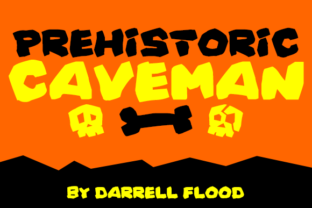
There is something about rough, hand-drawn lettering that instantly pulls you back to a time before screens, before polished vector curves, before anything felt mass-produced. When you see a font that looks like it was scratched onto cave walls with a piece of charcoal, something clicks. It feels honest, a little messy, and full of personality. That is exactly what Darrell Flood captured with Prehistoric Caveman, a playful, handcrafted typeface designed for dinosaur and prehistoric themes. It comes loaded with special characters like skulls, bones, and other Stone Age touches that make it stand out from the sea of generic display fonts.
If you have ever tried to design something with a prehistoric theme using a standard font, you already know the struggle. The letters feel too clean. The vibe is off. Nothing says caveman about a perfectly kerned sans-serif. Prehistoric Caveman solves that problem by giving you a typeface that already lives in the world it is meant to represent. Every letterform carries a rough, hand-drawn energy that feels like it was carved with primitive tools. For creators, educators, small business owners, and anyone who works with visual content, that distinction matters more than you might think.
Where Prehistoric Caveman Actually Gets Used
It is easy to look at a font like this and assume it only belongs in children's activity books or Halloween party flyers. In reality, people use Prehistoric Caveman across a much wider range of projects than you would expect. The trick is understanding the situations where rough, playful typography adds something real to the experience.
Educational materials and classroom resources
Teachers and homeschool parents spend a lot of time trying to make worksheets and lesson slides feel engaging. When you are teaching kids about dinosaurs, early humans, or prehistoric animals, the visual language of your materials matters. A standard font makes the page feel like any other worksheet. Prehistoric Caveman changes that instantly. The skull and bone decorative characters work great for borders, bullet points, or section dividers. Kids respond to the visual cues. They see those rough letters and bones, and the whole lesson feels more like a discovery than an assignment.
One educator I spoke with uses Prehistoric Caveman for the title headers on her dinosaur unit worksheets and leaves the body text in a clean, readable font. That combination gives the materials a themed look without sacrificing readability. She also prints out letters using the font for her classroom bulletin board, adding the skull and bone characters around the edges. It takes five minutes but makes the room feel completely different during that unit.
Small business branding and product labels
Small business owners who sell handmade goods often struggle to find fonts that match the personality of their products. If you run an Etsy shop selling fossil-themed jewelry, dinosaur soaps, or prehistoric home decor, Prehistoric Caveman gives your branding a cohesive, handcrafted feel. The rough edges in the letterforms communicate that your products are not mass-produced. They feel made by hand, which matters when you are competing with bigger sellers.
Consider a small candle business that makes scents named after prehistoric creatures. Using Prehistoric Caveman on the labels creates a consistent visual identity across the product line. Add a small skull character next to the scent name, and the whole package feels intentional. Customers notice those details. They take photos of the packaging and share them on social media. The font itself becomes part of the brand experience.
Event posters and themed parties
Birthday parties, themed events, and community gatherings often need signage that sets the mood immediately. A Jurassic-themed birthday party for kids or adults benefits from a font that looks like it belongs in a prehistoric jungle. Prehistoric Caveman works well for welcome signs, food labels (think "Caveman Chili" or "Dinosaur Nuggets"), and activity station markers. The bone and skull characters can replace standard bullet points or serve as arrows pointing to different areas of the party.
One party planner I know uses the font for all her signage at dinosaur-themed events. She says the biggest compliment she gets is from parents who notice that the little details match the theme. The font does the heavy lifting of establishing tone without requiring expensive decorations.
Who Benefits Most from Prehistoric Caveman
Different people use this font in different ways, and the value shifts depending on what you need it for. Understanding the specific benefits for each type of user helps you decide whether it fits your next project.
Content creators and social media marketers
Attention spans online are short, and the first thing people notice is how your content looks. If you run a social media account about paleontology, dinosaurs, or prehistoric life, your visuals need to stand out in a crowded feed. Prehistoric Caveman lets you create quote graphics, announcement posts, and title cards that feel distinct. The rough letterforms catch the eye because they look different from every polished sans-serif font on Instagram.
For YouTube thumbnail designers, the font works well for channel names or video titles that need a prehistoric vibe. Pair it with a textured background, and the combination creates a thumbnail that people stop scrolling to read. That split second of attention is everything on platforms where competition is fierce.
Game developers and app designers
Indie game developers working on prehistoric-themed games often need UI elements that match the setting without looking too polished. Prehistoric Caveman works for title screens, menu buttons, and in-game signage. The special characters like bones and skulls can be used as icons or collectible indicators within the game world. Because the font has a rough, hand-drawn quality, it fits naturally into games with pixel art or hand-drawn visual styles.
One solo developer I spoke to used Prehistoric Caveman for the entire UI of a mobile game about caveman survival. He said the font saved him weeks of trying to design custom lettering for every screen. The skull character became the icon for danger zones, and the bone character marked save points. Players responded positively to the consistency of the visual language.
Hobbyists and DIY creators
Not everyone who uses Prehistoric Caveman does it for work. Hobbyists making custom T-shirts, scrapbook pages, or personalized gifts find the font adds a handmade feel that store-bought lettering cannot replicate. If you are designing a shirt for a dinosaur-obsessed family member, using Prehistoric Caveman for the text makes the gift feel more personal than something printed with a generic font.
The decorative characters extend the utility even further. A scrapbook page about a trip to a natural history museum can use the bones and skulls as page accents. A handmade card for a kid who loves dinosaurs can feature a message written entirely in the font, with skull characters replacing standard punctuation. These small touches make the difference between a generic creation and something memorable.
What to Consider Before Using Prehistoric Caveman
No font works perfectly in every situation, and Prehistoric Caveman is no exception. Understanding its strengths and limitations helps you apply it in ways that get the best results.
Readability is the first thing to evaluate. The rough, hand-drawn letterforms that give the font its personality also make it less readable at small sizes or for long blocks of text. Using Prehistoric Caveman for body paragraphs in a book or lengthy article would frustrate readers. The font thrives in short bursts: headlines, titles, labels, and decorative uses. Pair it with a clean, readable font for body text to maintain accessibility while preserving the visual impact.
Context also matters. Prehistoric Caveman communicates a specific tone that works well for playful, educational, or themed projects. It would feel out of place in professional corporate materials, serious historical documents, or minimalist design layouts. The font is a tool for setting mood, and like any tool, it works best when applied to the right job.
Licensing and file formats matter too, especially if you plan to use the font in commercial projects. Always check the license terms before using Prehistoric Caveman in products you sell. Darrell Flood created this font with a specific intention, and respecting the usage terms ensures you stay on the right side of copyright while supporting independent type designers.
Making Prehistoric Caveman Work in Real Projects
The people who get the most out of this font are the ones who think about placement and purpose before they start typing. Instead of using Prehistoric Caveman everywhere in a project, use it strategically where it will have the most impact. A single title in the font carries more weight than a whole page of hard-to-read decorative text.
For digital projects, consider how the font will render on different screen sizes. Test it on mobile devices where letterforms can become harder to read at smaller scales. For print projects, pay attention to ink bleed and paper texture. The roughness of Prehistoric Caveman interacts differently with different printing methods. A test print saves you from wasting materials on a design that does not translate well from screen to paper.
The decorative characters deserve special attention. Skulls, bones, and other prehistoric symbols included in the font can be used as standalone graphics, not just as letters. Experiment with them as bullet points, border elements, or accent marks. One designer I know built an entire event logo using only the bone character arranged in a circle, with the event name written in Prehistoric Caveman across the center. That kind of creative use transforms a font into a complete design system.
Prehistoric Caveman fills a specific niche that generic fonts cannot touch. It gives you the ability to communicate a rough, playful, handcrafted prehistoric aesthetic without needing custom illustration skills or expensive design software. For anyone creating content around dinosaurs, early humans, or Stone Age themes, it is the kind of tool that pays for itself in time saved and results improved.
Darrell Flood built something that feels like it was already waiting in a cave somewhere, just dusty enough to feel real, just rough enough to feel made by hand. That authenticity is what makes people stop and look, whether they are kids in a classroom, shoppers on Etsy, or friends at a themed party.