Sunlight: A Modern Calligraphic Font Rooted in Unicode's Creative Potential
What Makes Sunlight Stand Out in the Typography Landscape
When you first encounter Sunlight, the immediate impression is one of effortless motion. Unlike rigid geometric fonts or overly ornate scripts, Sunlight strikes a balance between playful energy and readable structure. The font is built entirely from Unicode-compliant characters, which means it works across platforms, browsers, and operating systems without requiring special software installations or font files. This technical foundation makes Sunlight unusually accessible for a calligraphic typeface.
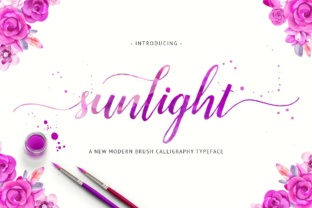
At its core, Sunlight is a modern calligraphic font that draws inspiration from hand-lettering traditions while embracing digital precision. The 260 unique characters and glyphs in the set include not only standard uppercase and lowercase letters, but also contextual alternates, ligatures, and decorative swashes. This gives designers room to create text that feels handwritten without sacrificing consistency. For a professional preparing a brand guideline or a hobbyist designing a wedding invitation, the range of glyphs opens up possibilities that simpler fonts cannot match.
The Unicode Advantage: Why It Matters for Everyday Use
Traditional calligraphic fonts often require proprietary formats or web font services. Sunlight sidesteps these constraints by leveraging Unicode encoding. Every character and glyph is mapped to a standard Unicode codepoint, so it renders correctly in email clients, content management systems, social media platforms, and even text editors. For an educator preparing multilingual materials or a researcher publishing online, this eliminates the frustrating issue of missing characters or broken layouts. The font's compatibility also means that collaborative workflows—where multiple people edit a document across different devices—remain stable.
Another practical benefit is portability. Since Sunlight does not rely on external font files being installed on each user's system, it can be used in web projects via CSS @font-face rules with minimal server overhead. For business owners managing their own website, this reduces loading times and avoids the licensing complexities associated with many commercial calligraphic fonts. The Unicode foundation also ensures that the font's special characters, such as alternate glyphs and swashes, are accessible through standard character maps rather than requiring custom keyboard layouts.
Exploring the 260 Characters and Glyphs: A Closer Look at Design Flexibility
The sheer number of glyphs in Sunlight might seem overwhelming at first, but the set is organized with practical use in mind. The core alphabet follows a consistent calligraphic style, with flowing strokes and varied stroke widths that mimic a broad-nib pen. Beyond the basics, the additional glyphs fall into several categories that serve different creative needs.
- Contextual alternates: These automatically swap based on surrounding letters, creating natural-looking connections between characters. For example, the letter "o" might take a different form when followed by a round letter like "c" versus a tall letter like "h."
- Ligatures: Common letter pairs such as "fi," "fl," and "tt" are combined into single glyphs that preserve the flow of handwriting. This is especially useful in long-form text where repetitive combinations would otherwise break the visual rhythm.
- Decorative swashes: Extended flourishes on terminal letters—like a sweeping tail on a lowercase "y" or an ornamental capital "S"—add elegance to headings, logos, and pull quotes.
- Stylistic sets: Multiple versions of certain letters let designers choose between more restrained or more expressive forms. A hobbyist making a poster might select the exuberant versions, while a professional creating a corporate brochure might prefer the subdued alternatives.
This variety means that Sunlight can adapt to different tones and contexts without requiring a separate font family. A single document can shift from formal to playful simply by selecting different glyph variants for key words or headings.
Real-World Use Cases Across Different Fields
The versatility of Sunlight makes it suitable for a wide range of applications. Below are several scenarios where the font's unique characteristics offer tangible advantages.
Branding and Logo Design
A business owner looking to differentiate their brand from competitors often turns to custom typography. Sunlight provides a foundation that feels bespoke without the cost of a full custom typeface. The decorative swashes and alternates allow a logo to include flourishes that convey craftsmanship and attention to detail. For a bakery, a florist, or an artisan workshop, the calligraphic style reinforces a handmade, personal identity.
Event Invitations and Stationery
Weddings, galas, and corporate events rely on printed materials that set the tone before guests arrive. Sunlight's range of uppercase alternates and swash endings makes it easy to create elegant invitations, place cards, and programs. The Unicode compatibility also means that digital invitations sent via email or social media retain the same visual quality as printed versions.
Educational Materials and Presentations
Educators and researchers often struggle to make text-heavy materials visually engaging without crossing into distracting territory. Sunlight's readability at medium sizes, combined with its organic feel, can make worksheets, posters, and slide titles more approachable. The font works particularly well for headings and subheadings paired with a simple sans-serif body font, creating a clear hierarchy that guides the reader's eye.
Social Media and Content Creation
For creators and hobbyists who produce content regularly, Sunlight offers a consistent aesthetic across platforms. A YouTube thumbnail, an Instagram story, or a blog header can all use the same calligraphic style without requiring separate design software or font licenses. The Unicode foundation ensures that the font renders correctly on mobile devices and in browser-based design tools like Canva or Crello.
Practical Workflow Considerations for Designers and Non-Designers Alike
Adopting a new font always involves some adjustment, and Sunlight is no exception. Here are several points to keep in mind when integrating it into your projects.
- Glyph access methods vary by software. In Adobe Illustrator and Photoshop, you can access alternates via the Glyphs panel. In Microsoft Word, the Symbol menu or Character Map utility works. For web projects, CSS font-feature-settings allow you to enable ligatures and stylistic sets programmatically. Knowing your tool's approach saves time during the design process.
- Pairing Sunlight with complementary fonts enhances readability. Because Sunlight has a strong calligraphic personality, it works best for display purposes—headings, short quotes, and emphasized text. Pair it with a clean sans-serif like Open Sans, Lato, or Montserrat for body text. This contrast gives the page structure while letting Sunlight shine where it matters most.
- Test rendering across target devices. Even with Unicode compliance, some older operating systems or browsers may not include the full set of glyphs. Use fallback font stacks in web projects and proofread printed materials carefully. A quick test across Chrome, Safari, Firefox, and Edge usually catches any issues.
- Consider line spacing and letter spacing. Calligraphic fonts often need additional leading (line height) to prevent ascenders and descenders from colliding. Similarly, adjusting letter spacing can improve legibility, especially in all-caps settings or dense layouts.
These considerations are not hurdles but rather design choices that let you control how Sunlight performs in your specific context. With a little experimentation, even a newcomer can achieve professional-looking results.
Comparing Sunlight to Other Calligraphic and Script Fonts
Many calligraphic fonts on the market fall into two categories: those that reproduce historical scripts with high fidelity, and those that simplify handwriting into a more uniform, digital-friendly form. Sunlight occupies a middle ground. It retains the expressive variation of hand-lettering—notice the subtle differences in stroke angle and terminal shape across characters—but its Unicode implementation and set of 260 glyphs give it a level of consistency that pure handwriting fonts lack.
Compared to popular script fonts like Pacifico or Great Vibes, Sunlight offers a wider range of alternate characters and a more modern feel. Pacifico works well for casual, friendly designs but has fewer stylistic options. Great Vibes is more ornate and traditional, which can feel formal to the point of being dated. Sunlight bridges these extremes: it can be playful or refined depending on which glyphs you select. For a researcher comparing fonts for a publication on digital typography, this adaptability makes Sunlight a notable case study in balancing artistic expression with technical constraints.
The Creative Potential of Sunlight in Collaborative and Iterative Projects
One aspect of Sunlight that deserves more attention is how it behaves when multiple people contribute to a single design. In a team setting—whether a marketing department refining a campaign or a group of students working on a presentation—the font's Unicode reliability means that everyone sees the same character set regardless of their operating system or software version. This reduces revision cycles and miscommunication.
Iterative design also benefits from the glyph variety. A designer can start with default characters and gradually swap in alternates and swashes as the project evolves. This process of refinement is more organic than switching between entirely different fonts. For example, an initial draft might use plain Sunlight for all headings, but as the design matures, the designer might replace the first letter of each heading with a swash variant and enable ligatures for smoother connections. The result feels custom without starting from scratch.
Hobbyists exploring typography for the first time will find that Sunlight's learning curve is gentle. The font's design encourages experimentation—trying different alternates, adjusting sizes, and testing pairings—without requiring deep knowledge of type theory. This makes it an excellent tool for workshops, online tutorials, or self-paced learning.
Why Sunlight Resonates in an Era of Digital Handcraft
There is a growing cultural preference for designs that feel human and imperfect, even in digital spaces. Sunlight taps into this trend by offering a calligraphic style that is polished but not sterile. The slight variations between glyph instances create a rhythm that suggests a real hand was involved, even though the output is fully digital. This quality is valuable for brands and creators who want to communicate authenticity without sacrificing professionalism.
For educators teaching typography or design history, Sunlight serves as a contemporary example of how Unicode enables the preservation and evolution of calligraphic traditions. Students can study how the font constructs letterforms, how alternates affect readability, and how digital constraints shape artistic choices. The font's collection of 260 characters provides enough material for meaningful analysis without being overwhelming.
Looking Ahead: Sunlight's Place in the Evolving Typographic Toolkit
As more tools and platforms adopt Unicode standards, fonts like Sunlight will likely become more common. The ability to embed decorative typography directly into text without image files or complex workarounds is valuable for accessibility, SEO, and performance. Search engines read text rendered with Sunlight normally, which means headings and content styled with the font retain their semantic weight—an advantage over using images for decorative text.
Business owners and marketers should note that this semantic compatibility supports content strategy goals. Calligraphic headings that are also readable by screen readers and search engine crawlers combine aesthetic appeal with technical best practices. For researchers studying digital typography and user experience, Sunlight provides a compelling data point in discussions about the intersection of design and accessibility.
Whether you are a professional designer refining a brand identity, a hobbyist creating invitations for a family event, or an educator developing engaging classroom materials, Sunlight offers a combination of artistic flair and practical reliability. Its 260 unique characters and glyphs, grounded in Unicode, make it a tool that invites exploration while delivering consistent results. The font does not try to be everything to everyone—instead, it excels in the space where creativity meets everyday utility, and that is precisely where most projects live.