Wattiny Pro: A Unique Fluid Typeface with Thick, Readable Lines
When evaluating typefaces for a project, the balance between visual impact and functional readability is often the deciding factor. Wattiny Pro positions itself as a distinctive option in this space, offering a fluid, thick-lined design that aims to serve both aesthetic and practical needs. For anyone researching typography solutions, understanding what this typeface does well, where it may fall short, and how it compares to other options is essential before making a selection.
What Is Wattiny Pro?
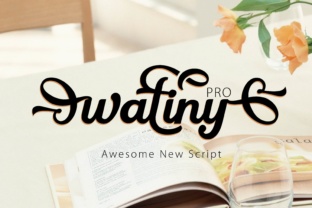
Wattiny Pro is a unique typeface characterized by its fluid, continuous strokes and noticeably thick lines. Unlike many fonts that rely on varying stroke widths to create contrast, Wattiny Pro maintains a consistent, bold weight throughout its letterforms. This gives the typeface a solid, almost sculptural appearance. The design is smooth and rounded, avoiding sharp angles or abrupt transitions, which contributes to a sense of movement and cohesion across characters.
The font is designed primarily for body text use, defying the common expectation that thick typefaces are only suitable for headlines. Its fluidity ensures that even at smaller sizes, the letters remain distinguishable. Additionally, the smooth contours make it particularly well-suited for die-cutting applications, where clean, uninterrupted edges are critical for physical reproduction.
Why Consider Wattiny Pro?
Several practical and aesthetic factors might lead someone to explore Wattiny Pro for their project. Understanding these reasons helps clarify whether it aligns with your specific goals.
Readability in Body Text
Thick typefaces are often avoided for long-form reading due to concerns about visual density. Wattiny Pro addresses this through its fluid geometry. The consistent stroke weight reduces visual noise, and the ample spacing between letters—built into the design—prevents the text from feeling cramped. For readers, this translates to a comfortable scanning experience, especially in short to medium-length paragraphs. In contexts where text is presented on a physical medium, such as packaging or signage, the thick lines further enhance legibility from a distance.
Die-Cutting Compatibility
For projects involving physical production, die-cutting requires clean, continuous paths to ensure clean cuts and avoid tearing or jagged edges. The smooth, unbroken contours of Wattiny Pro are engineered with this in mind. Whether used for logos, labels, or decorative lettering, the typeface maintains its integrity during the cutting process. This is a practical advantage over fonts with delicate serifs, sharp corners, or variable stroke weights that can complicate die-cut tooling.
Distinctive Aesthetic
The fluid, thick lines impart a sense of warmth, solidity, and modernism. This can be a strong fit for brands aiming to convey reliability without appearing overly formal. The rounded letterforms also lend a friendly, approachable feel. When used in display settings, such as on a storefront or in a logo, Wattiny Pro creates a memorable visual signature that stands out without relying on dramatic embellishments.
Benefits and Tradeoffs of Wattiny Pro
Like any typeface, Wattiny Pro offers clear benefits but also carries tradeoffs that should be weighed against project requirements.
Benefits
- High visual presence: The thick strokes ensure that text remains visible even at smaller sizes or when viewed from a distance. This is particularly useful for signage, posters, and packaging where legibility at speed is important.
- Fluid design for physical applications: The smooth contours reduce issues with ink bleed in print and facilitate clean die-cutting. For projects that will be physically reproduced, this is a significant time and cost saver.
- Consistent readability: Unlike some thick typefaces that sacrifice character differentiation at small sizes, Wattiny Pro maintains distinguishing features (such as open counters in letters like "e" and "a") that support reading.
- Modern, approachable tone: The design avoids aggressive or stark geometry, making it suitable for brands that want to appear contemporary yet accessible.
Tradeoffs
- Limited suitability for fine print: At very small sizes (below 8pt), the thick strokes may begin to fill in the letterforms, reducing clarity. For legal disclaimers, footnotes, or other tiny text, a lighter weight or more open typeface would be preferable.
- Not ideal for minimalist or ultra-light designs: Projects that require an airy, delicate, or highly refined aesthetic may find Wattiny Pro too heavy or robust. Its presence demands attention, which may conflict with a minimalist brand identity.
- Less versatile for mixed-typography layouts: Because of its strong personality, Wattiny Pro can dominate a layout. Pairing it with other typefaces requires careful consideration to avoid visual tension. Sans-serif fonts with neutral character, such as Helvetica or Open Sans, often work, but the combination may not suit all designs.
- Limited digital-only applicability: While Wattiny Pro works well in display scenarios, its performance in long digital documents (like websites with extensive body copy) may be fatiguing. The thick lines also increase file weight slightly compared to thinner fonts, though this is rarely a practical issue.
When Wattiny Pro Is a Strong Fit
Certain use cases align naturally with the characteristics of Wattiny Pro. If your project falls into any of these categories, it is worth serious consideration.
- Physical product branding: For items that will be die-cut, embossed, or debossed, the fluid contours and consistent weight ensure clean manufacturing results. Product labels, hang tags, and custom packaging can benefit from the durability of the design.
- Signage and environmental graphics: Whether on storefronts, interiors, or event banners, Wattiny Pro remains legible at large sizes and from a distance. The thick lines are resistant to distortion from lighting or viewing angle.
- Logo design for approachable brands: Companies in the food, beverage, children's products, or hospitality sectors often seek a typeface that feels warm and trustworthy. Wattiny Pro's rounded, fluid forms support this tone.
- Short-form body text in print: Brochures, product descriptions, and catalog entries that consist of a few sentences to a short paragraph can use Wattiny Pro effectively. The readability is sufficient for quick reading tasks without causing visual strain.
When Alternatives May Be Worth Considering
There are scenarios where Wattiny Pro may not be the optimal choice. Recognizing these situations can save time and lead to better outcomes.
- For extensive body copy: If your project involves long articles, books, or web content that requires hours of reading, a traditional text typeface with lighter weight and higher contrast (such as Garamond, Minion, or Source Serif) is likely more comfortable and less fatiguing.
- For ultra-small text: Fine print, disclaimers, or captions under 8pt should generally avoid thick typefaces. Consider a lightweight sans-serif or a specialized small-text font instead.
- For high-contrast or delicate designs: Brands that aim for elegance, refinement, or minimalism may find Wattiny Pro too bold. A typeface with variable stroke contrast, such as Didot or Bodoni, might better serve such aesthetics.
- For variable font requirements: If your project demands a responsive, variable font that can adjust weight and width seamlessly across screen sizes, Wattiny Pro (if not available in variable format) may not offer the flexibility needed. A modular variable font would be more appropriate.
Practical Decision-Making Insights
Choosing a typeface involves more than just visual appeal. To determine whether Wattiny Pro aligns with your goals, consider the following practical steps.
Test at Intended Sizes
Always sample Wattiny Pro at the exact sizes and mediums you plan to use. Print a test page for physical applications, or review it on different screens for digital use. Observe whether the thick lines cause any legibility issues, especially in longer passages or at the smallest intended size.
Evaluate Pairing Potential
Because Wattiny Pro has a strong personality, it works best when paired with a more neutral secondary typeface. Test combinations with clean sans-serifs or understated serifs. If the pairing feels unbalanced, consider whether a different primary typeface might allow greater harmony.
Consider the Physical Production Process
If you are planning die-cutting, request a proof or simulation before finalizing. Confirm that the smooth contours indeed translate to clean cuts. While Wattiny Pro is designed for this purpose, actual results can depend on material thickness, cutting process, and the manufacturer's capabilities.
Assess Long-Term Use
If your brand or project will use this typeface over many years, consider its timelessness. Fluid, thick-stroke designs like Wattiny Pro are modern but can become associated with specific eras. For a brand that needs to remain relevant across decades, a more neutral typeface might be safer. If the look is central to your identity, the risk is likely acceptable.
Aligning Wattiny Pro with Your Needs
Wattiny Pro offers a clear value proposition for projects that benefit from a thick, fluid, and readable typeface with strong physical performance. Its die-cutting compatibility and approachable aesthetic make it a practical choice for product branding, signage, and short-form print content. However, its limited suitability for fine print, extensive body copy, or minimalist designs means it is not a universal solution.
For readers evaluating this typeface, the decision comes down to understanding the primary use case. If your project involves physical production that demands clean edges, or if you want a friendly but solid visual presence, Wattiny Pro is a strong candidate. If your work prioritizes flexibility across digital environments, delicate aesthetics, or long-form reading, exploring alternatives with lighter weights or more variable design might yield better results.
Ultimately, selecting a typeface is a nuanced decision that balances function, form, and context. By articulating your priorities—whether they center on manufacturing practicality, brand tone, or reader comfort—you can determine whether Wattiny Pro serves as the right tool for your typographic needs.